I would like to introduce you to a woman named Jael. She is a woman whose story in the Bible is not lengthy and only takes up two chapters in the book of Judges. Her character under pressure, decision-making skills and her story can leave a lasting impact on all who learn of this little-known housewife from the Old Testament. She has become an inspiration to me and is who this new project that I am embarking on is named after. You might wonder why out of all the women in the Bible I aspire to be like Jael. It is true her place in Biblical history is gory, gruesome, and more than slightly aggressive, but maybe her unusual story is something that draws me to her. Her story is different, it is not a fairytale, it is not pretty or wholesome. Jael’s story is not what you or society might expect from a Biblical woman, but that does not mean that she was not instrumental or useful in advancing God’s overall plan for the ages, she was not without purpose. Before we examine Jael and her life, please allow me to set the scene for you which led up to this woman’s entrance into time-enduring Biblical history.
It is about 1250 B.C. in ancient Israel, between the Mediterranean Sea and the Sea of Galilee is the Jezreel Valley, and if you know one bad character trait of the ancient Israelites, you know that they continually sinned against God. What do they say about history repeating itself? Well, our story opens with, surprise, surprise, the Israelites have once again sinned against God. Now not only have the Israelites sinned against God, but they sinned against Him in their most favorite way – idolatry. Idolatry was rooted deep in their hearts and was once again drawing the Israelites away from God. If you look back to chapter 3 of Judges, you can get a glimpse of the repetitiveness of Israel’s idolatry and God’s reaction to their sin. Each time the Israelites turned from God to idolatry, He allowed them to be oppressed by their enemies through slavery or war. Eventually, after they had enough of the oppression, the Israelites would cry out to God for help, and faithfully He would answer and deliver them. Judges chapter 4 opens with “the children of Israel again did evil in the sight of the LORD…” Once again, the Israelites have turned to idol worship instead of worshipping God. God allowed one of Israel’s longtime enemies, the Canaanites, under the rule of King Jabin, to “mightily oppress” the Israelites. This 20 year oppression, was led by the Canaanite general, Sisera, and he was the type of general you could imagine most ancient military leaders to be like. He was a savage, evil man who probably did not forget about his ancestor’s suffering at the hand of the Israelites years before under Joshua, and perhaps he was in some way now repaying punishment on the Israelites. Sisera’s reputation of brutality was no doubt increased by his collection of iron chariots, which was 900 strong and were outfitted unlike normal chariots. Sisera’s chariots were known to have protruding out of each wheel a curved blade, imagine the grim reapers blade, which would cut down anything or anyone in its path. These were not your typical chariots, but Sisera was not your typical general, he was a merciless tyrant of a man, he was a man that evoked fear.
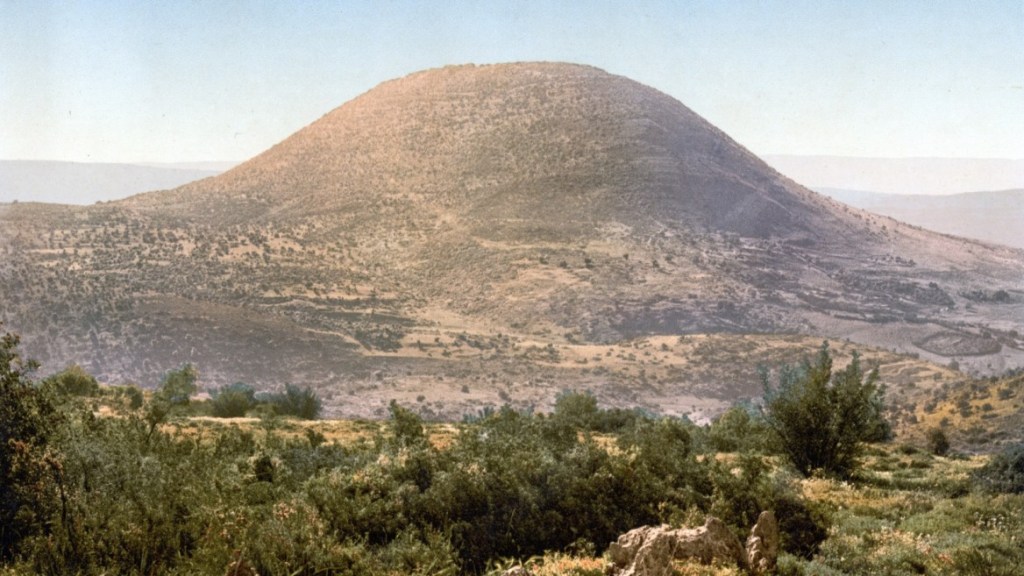
After 20 years of oppression, the Israelites finally turned from their idolatry and looked to God for help, and as always, He was faithful to hear and answer the cries of His children. Deborah, the prophetess and judge, the overseer over all things legal and military in her region of Israel, summoned her general, Barak, to a meeting where she held court. Her court was not located in the city, but under the palm trees of Israel, between Ramah and Bethel. Barak came and met with his military commander, Deborah. During their meeting, Deborah instructed Barak that he had been chosen to lead the Israelite army of 10,000 men up to Mt. Tabor – it is time to prepare to face their enemy, it is time for their oppression to be over. Deborah further explained to Barak that God was going to lead Sisera and his men to the river Kishon, which ran near the base of Mt. Tabor. Once the Canaanite army had settled by the river, Barak would lead the Israelite army down the mountain to war. And there the Canaanite army would fall. After hearing the battle plan, Barak expressed his reluctancy to go alone, he wanted Deborah to ride into battle with him, otherwise he is not complying. Please do not get the idea that Barak was trying to hide behind Deborah, but remember that she, as judge, is the physical representative of God to Israel. Barak recognized Deborah’s position and wanted the theocratic representative of God close to the battle. Deborah agrees, but she knows that she is not going with Barak for her or his honor, she is going for God’s honor. Before they depart to Mt. Tabor, Deborah prophesies to Barak that Sisera’s death will not be at his hand or at the hands of his men, but instead Sisera’s death will be at the hand of a woman.
While God may let His children make their own mistakes time after time again, remember that He had promised to never forsake them, and He was not planning to forsake them now. With Deborah at his side, Barak led the Israelite army up to Mt. Tabor and, just as God had planned, Sisera led his army to the river Kishon. Everyone was providentially brought to the place where they needed to be. Even though Deborah ceremoniously went up to Mt. Tabor with Barak, she would not be fighting in this battle alongside him, instead she would stay behind and watch the battle unfold from the mountain top. Barak and the Israelite army descended Mt. Tabor on foot, as they were not outfitted with the same caliber of military equipment that the Canaanites possessed. However, they do have God on their side. As Barak and his men are in formation and the battle is about the begin, God sent rain to the Jezreel Valley. This sudden rain from Heaven caused the river Kishon to overflow and flood the valley. The flash flood caused Sisera and his men to panic because their heavy iron chariots began to get stuck in the muddy, rain-soaked valley. Much of their success in battle relied on Sisera’s chariots, but in the mud, they lost their ability to maneuver effectively and swiftly. They lost their advantage over the Israelites. Now the Canaanite army, trapped in useless chariots in the muddy Jezreel Valley were unable to flee the advancing Israelite army. Sisera’s plan failed not because of Barak or the Israelite army, but because the all-knowing, Almighty God of Israel thwarted it. Being an experienced general, he realized his outcome in this war was not going be success, his 20 years of bloodshed over Israel is finally ending. As shocking as it may be to imagine, Sisera was not an honorable leader, he did not stay with his men to fight to end, but instead he deserted them to fight the Israelite army on their own. Sisera abandoned his chariot, left it mired in the valley where his men would either be captured or die at the hands of the Israelites. A defeated Sisera fled for his life on foot into the desert and traveled alone, a distance of 20 miles, give or take, from the river Kishon to Kedesh. There in the Kedesh, searching for shelter, he met a Kenite housewife, Jael, who would change the course of his life, as well as alter the course the lives of the Israelites.
***Part 2 and the conclusion of this series will be released in the coming days.
 Jael's Journal
Love love love!!!
LikeLike
I love it!
LikeLike