Like Mary of Bethany, we know the town where Mary Magdalene comes from by how she is identified. She was from the town of Magdala, a city off the coast of Galilee roughly three miles from Capernaum, known for its dye and textile industry. The Bible does not mention her parents, marital status, children, or even her age. We may assume she was unmarried and without children, given her willingness to serve in the years following her encounter with Christ.
Some have believed Mary Magdalene to be either a prostitute or the woman who sat at Jesus’ feet in Luke 7:37. The latter assumption comes because she is introduced just a few verses after that woman. However, Scripture never confirms this. What we are told is that she was possessed by seven devils (demons) (Luke 8:2).
We are first introduced to Mary Magdalene chronologically in Luke 8:1–3:
“1 And it came to pass afterward, that he went throughout every city and village, preaching and shewing the glad tidings of the kingdom of God: and the twelve were with him, 2 And certain women, which had been healed of evil spirits and infirmities, Mary called Magdalene, out of whom went seven devils, 3 And Joanna the wife of Chuza Herod’s steward, and Susanna, and many others, which ministered unto him of their substance.”
Notice the number of demons—seven. Seven is a spiritual number of completeness. Mary was completely dominated by these demons. Imagine what she might have looked like as the demons took control of her body, making her physically weak and sickened by their power. Her life must have been one of torment—no rest, no peace of mind or heart—until she met the Savior.
We are not told how or where she met Jesus, nor the specific events of her deliverance. But we do know she had been “healed of evil spirits and infirmities” (Luke 8:2). During her possession, her mind might have been like a stormy sea—chaotic and restless—but after encountering Jesus, she must have experienced a peace as calm as the stillest ocean.
Mary Magdalene was made completely whole. She had a new life and a new purpose. Having been freed by Jesus Christ, she desired to serve Him—the One to whom she owed everything—and to tell others what He had done for her.
She became deeply involved in Jesus’ ministry. Mary Magdalene is mentioned fourteen times in the Gospels. In eight of those passages, she appears in connection with other women, but always listed first—perhaps indicating a leading role in service. Five times she is mentioned alone in connection with the Resurrection (Mark 16:9; John 20:1, 11, 16, 18). Only once is she listed after others (John 19:25). Her repeated mention shows her importance and devotion to Jesus’ ministry.
Her faithfulness and gratitude are striking. Though we may not have been freed from seven demons, Jesus has delivered us from the bondage of sin and its eternal consequences. Do we express the same gratitude and devotion to Him?
When the time came for Jesus to die on the cross for the sins of mankind, many forsook Him. Yet, Mary Magdalene was not one of them. She was there as He was led to Golgotha and crucified. While many of His disciples had fled, she remained near, alongside His mother and others. She watched in sorrow as the One who had healed her was mocked, stripped, beaten beyond recognition, and nailed to a cross. Though powerless to stop the suffering, she stayed—offering her presence and comfort in His final moments.
After His death, Joseph of Arimathaea took Jesus’ body, wrapped it in linen, and laid it in his tomb. Matthew 27:61 says, “And there was Mary Magdalene, and the other Mary, sitting over against the sepulchre.”
Her devotion continued even in His death. She had ministered to Jesus in life, and now she ministered to Him in burial. Luke 23:56 adds, “And they returned, and prepared spices and ointments; and rested the sabbath day according to the commandment.”
Even in grief, she was thoughtful and intentional in her service—planning to return after the Sabbath to anoint His body.
Mary was one of the last to leave the cross and the first to arrive at the tomb. She became the first witness to the most significant event in human history: the resurrection of Jesus Christ. What an honor and privilege!
John 20:1–18 tells the account:
John 20.1-18, “1 The first day of the week cometh Mary Magdalene early, when it was yet dark, unto the sepulchre, and seeth the stone taken away from the sepulchre. 2 Then she runneth, and cometh to Simon Peter, and to the other disciple, whom Jesus loved, and saith unto them, They have taken away the Lord out of the sepulchre, and we know not where they have laid him. 3 Peter therefore went forth, and that other disciple, and came to the sepulchre. 4 So they ran both together: and the other disciple did outrun Peter, and came first to the sepulchre. 5 And he stooping down, and looking in, saw the linen clothes lying; yet went he not in. 6 Then cometh Simon Peter following him, and went into the sepulchre, and seeth the linen clothes lie, 7 And the napkin, that was about his head, not lying with the linen clothes, but wrapped together in a place by itself. 8 Then went in also that other disciple, which came first to the sepulchre, and he saw, and believed. 9 For as yet they knew not the scripture, that he must rise again from the dead. 10 Then the disciples went away again unto their own home. 11 But Mary stood without at the sepulchre weeping: and as she wept, she stooped down, and looked into the sepulchre, 12 And seeth two angels in white sitting, the one at the head, and the other at the feet, where the body of Jesus had lain. 13 And they say unto her, Woman, why weepest thou? She saith unto them, Because they have taken away my Lord, and I know not where they have laid him. 14 And when she had thus said, she turned herself back, and saw Jesus standing, and knew not that it was Jesus. 15 Jesus saith unto her, Woman, why weepest thou? whom seekest thou? She, supposing him to be the gardener, saith unto him, Sir, if thou have borne him hence, tell me where thou hast laid him, and I will take him away. 16 Jesus saith unto her, Mary. She turned herself, and saith unto him, Rabboni; which is to say, Master. 17 Jesus saith unto her, Touch me not; for I am not yet ascended to my Father: but go to my brethren, and say unto them, I ascend unto my Father, and your Father; and to my God, and your God. 18 Mary Magdalene came and told the disciples that she had seen the Lord, and that he had spoken these things unto her.“
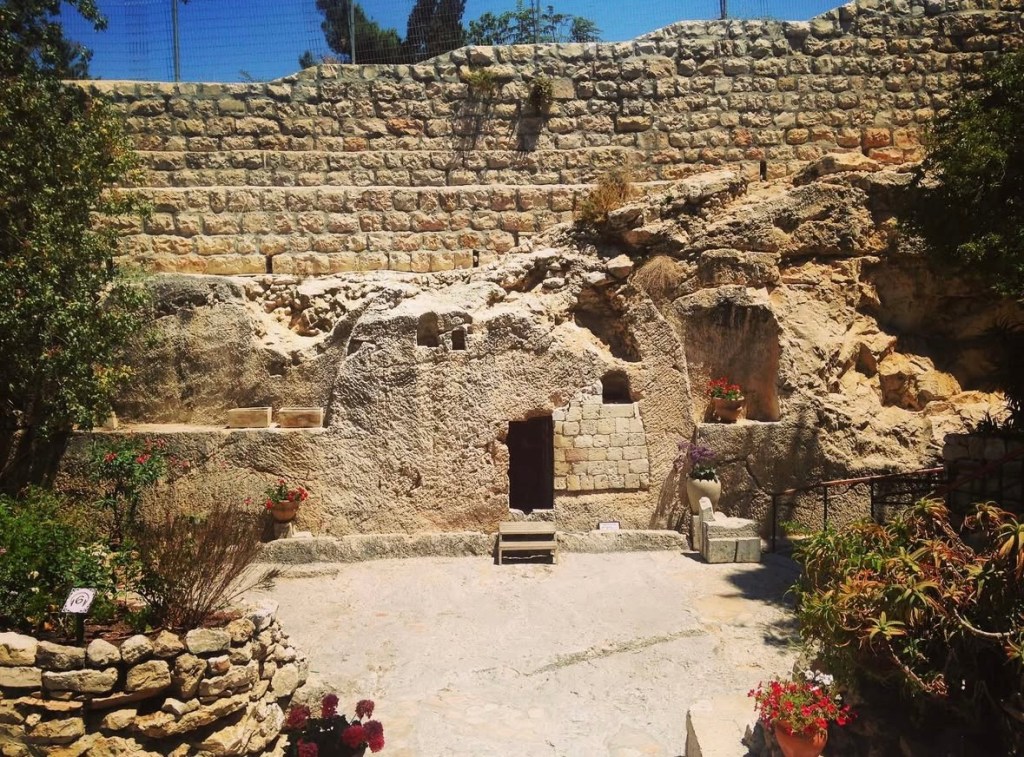
Mary came to the tomb early that first Easter morning, while it was still dark. Seeing the stone rolled away, she wept in confusion and grief. She ran to Peter and John, exclaiming, “They have taken away the Lord out of the sepulchre, and we know not where they have laid him.”
The disciples ran to the tomb, saw it empty, and departed—“to their own home.” But not Mary. She stayed. Standing outside, weeping, she looked in and saw two angels sitting where Jesus’ body had been. They asked, “Woman, why weepest thou?” She replied, “Because they have taken away my Lord, and I know not where they have laid him.”
Turning around, she saw a man she thought was the gardener. When He asked, “Woman, why weepest thou? whom seekest thou?” she replied, “Sir, if thou have borne him hence, tell me where thou hast laid him, and I will take him away.”
Her love and devotion blinded her to the impossibility of her own words—how could she carry a man’s body alone? But her concern was not for herself; her heart was full of Christ. Then Jesus spoke her name: “Mary.” Instantly she recognized His voice and cried, “Rabboni!”—meaning Master. As I read that Scripture, I can’t help but choke up. Even now, I feel as though I cannot fully comprehend the emotions she must have felt in that moment. Not knowing when she would hear His voice again. The One who had once called her out of the depths of her sin—the One whose death on the cross for her she had witnessed—had conquered death and now stood alive before her.
In that moment, the weeping woman became the first witness of the risen Savior. Jesus then commissioned her with the greatest message ever given:
“Go to my brethren, and say unto them, I ascend unto my Father, and your Father; and to my God, and your God.”
Mary ran with joy to tell the disciples that Jesus was alive.
Though this is the last direct mention of Mary Magdalene in Scripture, we can reasonably assume she was probably among the women in Acts 1:14, who prayed and waited with the apostles for the coming of the Holy Spirit. On the day of Pentecost, she would have been filled with His power and continued as a faithful witness of her risen Lord.
There are several lessons we can learn from Mary of Magdala.
First, she shows what Christ can do for a woman—or for anyone. When Jesus met her, she was tormented and enslaved in sin, but He healed her completely—body, mind, and soul—and made her one of His loyal followers. Likewise, if we have been saved, we too have been cleansed and set free from sin through Him.
Second, Mary’s life shows what a grateful believer can do for the One who has done so much. Once healed, she served. She followed Jesus, ministered to His needs, and testified of His death and resurrection. Her gratitude overflowed into devotion.
Mary owed much, gave much, loved much, and served much. May we, like Mary Magdalene, love and serve Christ to the fullest, daily witnessing to the power of His resurrection.
Some questions for reflection:
- Imagine the contrast between Mary’s life before and after meeting Jesus. What might her peace and freedom have felt like?
- What does Mary’s presence at the cross and the tomb reveal about her love and courage?
- Jesus sent Mary to deliver the first message of His resurrection. What does this tell us about how God values and uses women in ministry?
- Mary’s gratitude overflowed into action. What are some ways we can express gratitude to God beyond words?
 Jael's Journal