Mary Magdalene: From Brokenness to a Bold and Devoted Faith

Like Mary of Bethany, we know the town where Mary Magdalene comes from by how she is identified. She was from the town of Magdala, a city off the coast of Galilee roughly three miles from Capernaum, known for its dye and textile industry. The Bible does not mention her parents, marital status, children, or even her age. We may assume she was unmarried and without children, given her willingness to serve in the years following her encounter with Christ.

Some have believed Mary Magdalene to be either a prostitute or the woman who sat at Jesus’ feet in Luke 7:37. The latter assumption comes because she is introduced just a few verses after that woman. However, Scripture never confirms this. What we are told is that she was possessed by seven devils (demons) (Luke 8:2).

We are first introduced to Mary Magdalene chronologically in Luke 8:1–3:

1 And it came to pass afterward, that he went throughout every city and village, preaching and shewing the glad tidings of the kingdom of God: and the twelve were with him, 2 And certain women, which had been healed of evil spirits and infirmities, Mary called Magdalene, out of whom went seven devils, 3 And Joanna the wife of Chuza Herod’s steward, and Susanna, and many others, which ministered unto him of their substance.”

Notice the number of demons—seven. Seven is a spiritual number of completeness. Mary was completely dominated by these demons. Imagine what she might have looked like as the demons took control of her body, making her physically weak and sickened by their power. Her life must have been one of torment—no rest, no peace of mind or heart—until she met the Savior.

We are not told how or where she met Jesus, nor the specific events of her deliverance. But we do know she had been “healed of evil spirits and infirmities” (Luke 8:2). During her possession, her mind might have been like a stormy sea—chaotic and restless—but after encountering Jesus, she must have experienced a peace as calm as the stillest ocean.

Mary Magdalene was made completely whole. She had a new life and a new purpose. Having been freed by Jesus Christ, she desired to serve Him—the One to whom she owed everything—and to tell others what He had done for her.

She became deeply involved in Jesus’ ministry. Mary Magdalene is mentioned fourteen times in the Gospels. In eight of those passages, she appears in connection with other women, but always listed first—perhaps indicating a leading role in service. Five times she is mentioned alone in connection with the Resurrection (Mark 16:9; John 20:1, 11, 16, 18). Only once is she listed after others (John 19:25). Her repeated mention shows her importance and devotion to Jesus’ ministry.

Her faithfulness and gratitude are striking. Though we may not have been freed from seven demons, Jesus has delivered us from the bondage of sin and its eternal consequences. Do we express the same gratitude and devotion to Him?

When the time came for Jesus to die on the cross for the sins of mankind, many forsook Him. Yet, Mary Magdalene was not one of them. She was there as He was led to Golgotha and crucified. While many of His disciples had fled, she remained near, alongside His mother and others. She watched in sorrow as the One who had healed her was mocked, stripped, beaten beyond recognition, and nailed to a cross. Though powerless to stop the suffering, she stayed—offering her presence and comfort in His final moments.

After His death, Joseph of Arimathaea took Jesus’ body, wrapped it in linen, and laid it in his tomb. Matthew 27:61 says, “And there was Mary Magdalene, and the other Mary, sitting over against the sepulchre.”

Her devotion continued even in His death. She had ministered to Jesus in life, and now she ministered to Him in burial. Luke 23:56 adds, “And they returned, and prepared spices and ointments; and rested the sabbath day according to the commandment.”

Even in grief, she was thoughtful and intentional in her service—planning to return after the Sabbath to anoint His body.

Mary was one of the last to leave the cross and the first to arrive at the tomb. She became the first witness to the most significant event in human history: the resurrection of Jesus Christ. What an honor and privilege!

John 20:1–18 tells the account:

John 20.1-18, “1 The first day of the week cometh Mary Magdalene early, when it was yet dark, unto the sepulchre, and seeth the stone taken away from the sepulchre. Then she runneth, and cometh to Simon Peter, and to the other disciple, whom Jesus loved, and saith unto them, They have taken away the Lord out of the sepulchre, and we know not where they have laid him. Peter therefore went forth, and that other disciple, and came to the sepulchre. So they ran both together: and the other disciple did outrun Peter, and came first to the sepulchre. And he stooping down, and looking in, saw the linen clothes lying; yet went he not in. Then cometh Simon Peter following him, and went into the sepulchre, and seeth the linen clothes lie, And the napkin, that was about his head, not lying with the linen clothes, but wrapped together in a place by itself. Then went in also that other disciple, which came first to the sepulchre, and he saw, and believed. For as yet they knew not the scripture, that he must rise again from the dead. 10 Then the disciples went away again unto their own home. 11 But Mary stood without at the sepulchre weeping: and as she wept, she stooped down, and looked into the sepulchre, 12 And seeth two angels in white sitting, the one at the head, and the other at the feet, where the body of Jesus had lain. 13 And they say unto her, Woman, why weepest thou? She saith unto them, Because they have taken away my Lord, and I know not where they have laid him. 14 And when she had thus said, she turned herself back, and saw Jesus standing, and knew not that it was Jesus. 15 Jesus saith unto her, Woman, why weepest thou? whom seekest thou? She, supposing him to be the gardener, saith unto him, Sir, if thou have borne him hence, tell me where thou hast laid him, and I will take him away. 16 Jesus saith unto her, Mary. She turned herself, and saith unto him, Rabboni; which is to say, Master. 17 Jesus saith unto her, Touch me not; for I am not yet ascended to my Father: but go to my brethren, and say unto them, I ascend unto my Father, and your Father; and to my God, and your God. 18 Mary Magdalene came and told the disciples that she had seen the Lord, and that he had spoken these things unto her.

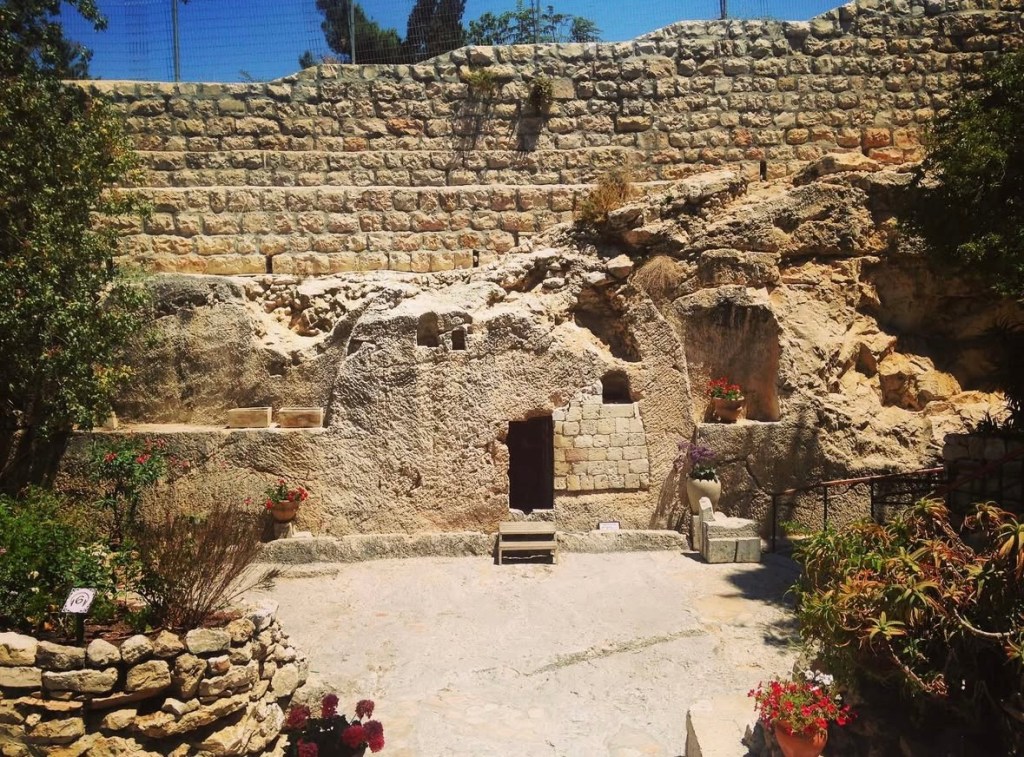
The Garden Tomb – Jerusalem, Israel

Mary came to the tomb early that first Easter morning, while it was still dark. Seeing the stone rolled away, she wept in confusion and grief. She ran to Peter and John, exclaiming, “They have taken away the Lord out of the sepulchre, and we know not where they have laid him.”

The disciples ran to the tomb, saw it empty, and departed—“to their own home.” But not Mary. She stayed. Standing outside, weeping, she looked in and saw two angels sitting where Jesus’ body had been. They asked, “Woman, why weepest thou?” She replied, “Because they have taken away my Lord, and I know not where they have laid him.”

Turning around, she saw a man she thought was the gardener. When He asked, “Woman, why weepest thou? whom seekest thou?” she replied, “Sir, if thou have borne him hence, tell me where thou hast laid him, and I will take him away.”

Her love and devotion blinded her to the impossibility of her own words—how could she carry a man’s body alone? But her concern was not for herself; her heart was full of Christ. Then Jesus spoke her name: “Mary.” Instantly she recognized His voice and cried, Rabboni!—meaning Master. As I read that Scripture, I can’t help but choke up. Even now, I feel as though I cannot fully comprehend the emotions she must have felt in that moment. Not knowing when she would hear His voice again. The One who had once called her out of the depths of her sin—the One whose death on the cross for her she had witnessed—had conquered death and now stood alive before her.

In that moment, the weeping woman became the first witness of the risen Savior. Jesus then commissioned her with the greatest message ever given:

“Go to my brethren, and say unto them, I ascend unto my Father, and your Father; and to my God, and your God.”

Mary ran with joy to tell the disciples that Jesus was alive.

Though this is the last direct mention of Mary Magdalene in Scripture, we can reasonably assume she was probably among the women in Acts 1:14, who prayed and waited with the apostles for the coming of the Holy Spirit. On the day of Pentecost, she would have been filled with His power and continued as a faithful witness of her risen Lord.

There are several lessons we can learn from Mary of Magdala.

First, she shows what Christ can do for a woman—or for anyone. When Jesus met her, she was tormented and enslaved in sin, but He healed her completely—body, mind, and soul—and made her one of His loyal followers. Likewise, if we have been saved, we too have been cleansed and set free from sin through Him.

Second, Mary’s life shows what a grateful believer can do for the One who has done so much. Once healed, she served. She followed Jesus, ministered to His needs, and testified of His death and resurrection. Her gratitude overflowed into devotion.

Mary owed much, gave much, loved much, and served much. May we, like Mary Magdalene, love and serve Christ to the fullest, daily witnessing to the power of His resurrection.

Some questions for reflection: 

  1. Imagine the contrast between Mary’s life before and after meeting Jesus. What might her peace and freedom have felt like?
  2. What does Mary’s presence at the cross and the tomb reveal about her love and courage?
  3. Jesus sent Mary to deliver the first message of His resurrection. What does this tell us about how God values and uses women in ministry?
  4. Mary’s gratitude overflowed into action. What are some ways we can express gratitude to God beyond words?
Phebe: A Woman of Trust, Faith, and Mission

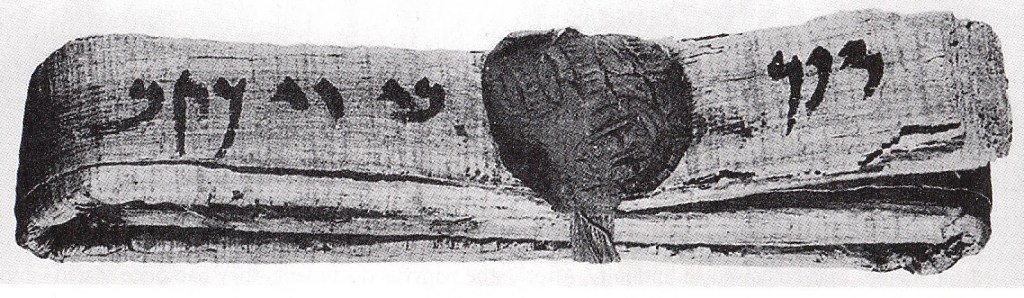
Unopened ancient papyrus letter with seal (BAR, 48)

1 I commend unto you Phebe our sister, which is a servant of the church which is at Cenchrea: That ye receive her in the Lord, as becometh saints, and that ye assist her in whatsoever business she hath need of you: for she hath been a succourer of many, and of myself also. – Romans 16.1–2

As the Apostle Paul approached the end of his third missionary journey, he found himself unable to travel to Rome. Yet, recognizing the importance of reaching his fellow believers there, he entrusted the delivery of his letter, later known to us as the Epistle of Romans, to someone he deeply trusted: a woman named Phebe.

Phebe, whose name means “bright and radiant,” was not Jewish, but a Greek woman. The Bible does not detail her marital status, profession, or whether she had children. What we do know, however, is this: she was a devoted Christian, a servant of the church at Cenchrea, a harbor city, and a woman who earned the full confidence of the Apostle Paul.

In a time when women were often marginalized as insignificant in public life, Paul chose Phebe to carry his letter to the Romans—one of the most theologically significant books in the New Testament. This choice was not made lightly. Perhaps Paul’s decision was strategic: a woman might have drawn less attention and thus avoided suspicion or interference during the long and dangerous journey. Whatever the reasoning, the task given to Phebe was of great importance. She wasn’t just a courier; she was also Paul’s personal representative.

Clement of Rome, writing shortly after Paul’s time, emphasized the importance of trustworthy letter carriers, describing them as “trustworthy and prudent men (or women) who from youth to old age have lived blameless lives.” Paul clearly held Phebe to that same high standard. In a world without postal services, delivering a letter meant physically transporting it across hundreds of miles—often by foot or sea—while ensuring its safety and delivering it faithfully.

Though Phebe is only mentioned in two verses of all of Scripture, her impact is profound. Paul refers to her as “our sister”—a term signifying not only their shared faith but also her inclusion in the larger family of God. Despite cultural and geographical differences, Phebe and the Roman Christians were united in Christ. They were different, but they were the same in heart. Paul instructed them to receive her “in the Lord” and to assist her in whatever she needed, a testament to her vital role in the ministry.

He also identifies her as “a servant of the church,” indicating she was actively involved in ministry work. The Greek word used here is diakonos, which is also translated as “deacon.” This suggests that she held a significant and respected position within the church at Cenchrea. Paul further praises her as “a succourer of many,” someone who provided help and support in times of need. Far from being a passive observer, Phebe was a woman who rolled up her sleeves and did the work of ministry. She served others with compassion and conviction, despite the risks that came with being a Christian in a hostile world.

Although we don’t know her background, we can infer certain things. Her ability to make the long journey from Cenchrea (near Corinth) to Rome—a distance of roughly 750 miles—suggests she was likely single, widowed, or perhaps a businesswoman like Lydia, who had both means and experience with travel. Regardless of her personal circumstances, one thing is certain: she was committed to fulfilling her role in God’s plan.

In modern terms, the journey from Cenchrea to Rome would take around 18–20 hours by car and boat. In Phebe’s time, in approximately 57 AD, the trip would have been arduous, taking weeks and involving both land and sea travel. Yet she undertook it with determination, knowing the importance of the message she carried—the Gospel itself, as expressed in Paul’s letter to the Romans.

This letter contains some of the clearest teachings on justification by faith, the role of grace, and the practical outworking of the Christian life. God could have chosen anyone to deliver it, but He chose Phebe. Through her obedience, the Roman believers—and eventually the entire world—received one of the foundational documents of the Christian faith.

Had Phebe not delivered that letter, the church in Rome might have remained in spiritual uncertainty until someone else delivered Paul’s letter, and possibly Paul’s plans to preach there could have been delayed or disrupted. Her faithfulness preserved and transmitted divine truth.

She stands among the many courageous and faithful women in Scripture who defied social expectations to serve God. Her testimony continues to challenge us today: to be faithful in whatever God calls us to do, to step forward in trust even when the journey is long or uncertain, and to serve others wholeheartedly.

Let us strive to follow Phebe’s example—bold, faithful, dependable, and willing to go the extra mile for the sake of the Gospel. In doing so, we too can become vessels for God’s message, impacting lives across time and personal bubble. Phebe’s actions remind us that seemingly small acts of obedience can have eternal consequences.

Credits:

Image credit from: BAR Magazine. “Biblical Archaeology Review.” Vol 35 No 3.

Deborah: God’s Chosen Leader in a Time of Crisis

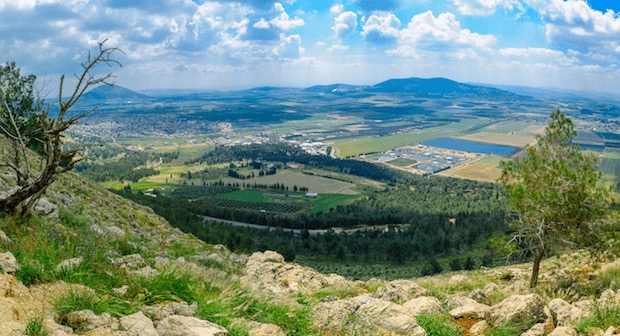
The Jezreel Valley. Photo located on Google

For Scriptural background, read Judges 4 and 5

Judges 4:1-5
1 And the children of Israel again did evil in the sight of the Lord, when Ehud was dead. And the Lord sold them into the hand of Jabin king of Canaan, that reigned in Hazor; the captain of whose host was Sisera, which dwelt in Harosheth of the Gentiles. And the children of Israel cried unto the Lord: for he had nine hundred chariots of iron; and twenty years he mightily oppressed the children of Israel. And Deborah, a prophetess, the wife of Lapidoth, she judged Israel at that time. And she dwelt under the palm tree of Deborah between Ramah and Bethel in mount Ephraim: and the children of Israel came up to her for judgment.

The Covenant and Israel’s Cycle of Rebellion

God entered into a covenant with the Israelites at Mount Sinai, which was conditional upon their obedience. If they obeyed, they would receive blessings, but if they disobeyed, they would face correction – which often in the form of oppression by their enemies. In Judges 4, we see Israel falling into this destructive cycle once again. The time would have been around 1250 B.C., in the Jezreel Valley between the Mediterranean Sea and the Sea of Galilee. The Israelites were reaping the consequences of their disobedience when God allowed them to fall under the rule of King Jabin of Canaan, whose ruthless army was led by the harsh commander Sisera.

For twenty years, the Israelites were oppressed by Sisera’s military might, including his 900 iron chariots, until, in their suffering, they cried out to God for deliverance. Just as God had been faithful to correct His people, He was equally faithful to show mercy. When the Israelites turned back to Him, He answered their prayers. This time would be no different.

Deborah: A Prophetess and Judge

The answer to their prayers came through Deborah, whom God chose to be the fourth of Israel’s 16 judges. Deborah was one of the 16 judges of Israel who were leaders which were specially appointed by God to lead His people. They were tasked with enforcing the covenant and ensuring peace in the land. Deborah stood out not only as a judge but also as one of the nine women in Scripture recognized as prophetesses, such as Miriam and Anna.

Deborah’s name means “bee,” and her name would hold meaning as she would play a crucial role in Israel’s history as described in Judges 4-5 and under her leadership would deliver a stinging blow to Israel’s enemy. Through Scripture, we learn that she was married to Lapidoth, though we do not know whether she had children, and lived in the mountainous region of Ephraim. I wonder what their home life was like? I wonder what kind of relationship they had as husband and wife? I imagine that Deborah, even though she had a strong personality, knew boundaries and her role as a wife. While not much is known about her past or qualifications for leadership, one thing was clear: God called her, and she responded in obedience. Her obedience was rare for that time, especially in a culture where male leadership was the norm.

Deborah held her court, as a judge, outside the city, between Bethel (which means “house of God”) and Ramah (meaning “height”), a region known for its elevated landscape. The place where she held court—under the “Palm Tree of Deborah”—was possibly named after Rebekah’s nurse, who was buried nearby (Genesis 35:8). Her role as a judge was different from the judicial system we think of today. As mentioned previously, a judge in ancient Israel was someone appointed by God to restore the people to Him, often guiding them in battle to defeat their enemies. As a judge, Deborah was deeply concerned for the well-being of those she led, consistently striving to uphold justice. Her decisions were grounded in God’s principles of fairness, and she worked to restore peace and stability to Israel, ensuring that righteousness prevailed in the land.

Deborah’s Court and Leadership

Unlike other judges and prophets, Deborah held court outside the city walls. The city gates were typically where important matters were handled, but Deborah chose to settle disputes and guide the people away from the city, perhaps because of Israel’s sin and idolatry within the city walls. Deborah did not go to the people—rather, they came to her for judgment. This shows that she was a woman of wisdom and respect, someone whose counsel was sought out, and her leadership was honored.

When the time came to lead the Israelites in battle against the Canaanites, Deborah called upon Barak, a military leader from Kedeshnaphtali, whom God had also appointed. Barak, however, hesitated in advancing into battle, wanting Deborah to accompany him into battle. He recognized that as a prophetess and judge, Deborah represented God’s authority. Deborah agreed to advance in battle alongside Barak, but because of Barak’s reluctance, Deborah prophesied that the victory over Sisera would not come through his hands, but through a woman’s.

The Battle and Sisera’s Defeat

The battle would unfold in the Jezreel Valley: picture a landscape stretching from west to east, beginning at Mount Carmel and the Sea of Galilee, and reaching the Jordan River through the mountains of Gilboa, Hermon, and Tabor. It spans from south to north, from the mountains of Ephraim to those of Galilee. As the Israelites prepared for battle, Deborah and Barak ascended Mount Tabor, where the 10,000 Israelite soldiers faced the overwhelming might of Sisera’s 900 iron chariots. But God was with the Israelites. As the battle started, a miraculous storm unleashed heavy torrential rain that flooded the Kishon River, catching Sisera’s men off guard. The downpour rendered Sisera’s chariots useless, trapping the Canaanite army in thick, slippery mud. The mighty iron chariots rendered completely useless and forced to flee on foot. This gave the Israelites the upper hand, leading to the defeat of Sisera’s forces.

Sisera fled and sought refuge in the tent of Jael, a Kenite woman. While he slept, Jael killed him by driving a tent peg through his skull, fulfilling Deborah’s prophecy that Sisera’s death would be at the hands of a woman.

Deborah’s Song of Victory

In Chapter 5 of the Book of Judges, Deborah sings a victory song. In 31 verses, she sings praises to God for the triumph over the Canaanites. Far from being proud or boastful, Deborah’s song gives all the glory to God. She recognizes that it was not through her strength or leadership, but rather God’s strength that brought the victory. She expresses a desire that those who love God would shine brightly, like the sun in its full strength. It’s clear in her song, that Deborah’s humility and confidence came from her unwavering faith in God, not in her own abilities – a trait that she embodied during her time judging the people of Israel.

Deborah’s life teaches us that it is God who choses who He uses and who is ready. Even though she was a woman, living in a male driven world, God used her mightily and she had the respect of the people of Israel. In a time when women had few leadership roles, Deborah was an example of strength, wisdom, and obedience. She didn’t let her sex hold her back from fulfilling God’s calling on her life. Through her, we see that God can use anyone—regardless of sex or status—to accomplish His purposes if they are willing to listen to His call and trust in His power.

Emulating Deborah’s Leadership

Deborah’s leadership was not marked by arrogance or domination, but by wisdom, grace, and humility. Unlike the “bossy” or manipulative women in the Bible, such as Delilah or Jezebel, Deborah wisely used her place in God’s story and influenced and respectfully guided the important men in her life and the children of Israel toward God and righteous action. She was respected by the men around her, including Barak and the military leaders, who followed her lead.

Her example teaches us that God calls women to positions of influence, whether in their homes, churches, workplaces, or communities. By following her example of wisdom, faith, obedience, discretion, and courage, we too, man or woman, can become instruments of God’s will, influencing and collaborating with the people around us for good.

Questions for Reflection:

  1. How was Deborah a good leader? What qualities do we look for in leaders?
  2. How does Deborah’s leadership style differ from that of a “bossy” woman?
  3. What battles are we facing today, and how can we be victorious like Deborah?

Hebrews 11.32-34: 32 And what shall I more say? for the time would fail me to tell of Gedeon, and of Barak, and of Samson, and of Jephthae; of David also, and Samuel, and of the prophets: 33 Who through faith subdued kingdoms, wrought righteousness, obtained promises, stopped the mouths of lions. 34 Quenched the violence of fire, escaped the edge of the sword, out of weakness were made strong, waxed valiant in fight, turned to flight the armies of the aliens.

For Jael’s part of the story:

Part 1: https://jaelsjournal.blog/2022/04/05/jael-the-hospitable-warrior-part-1/

Part 2: https://jaelsjournal.blog/2022/06/20/jael-the-hospitable-warrior-part-2/

Mary and Martha: Prioritizing What Matters Most – Service and Seeking God’s Presence

Photo by cottonbro studio on Pexels.com

For Scriptural Context Read Luke 10 

Luke 10.38-42

38 Now it came to pass, as they went, that he entered into a certain village: and a certain woman named Martha received him into her house. 39 And she had a sister called Mary, which also sat at Jesus’ feet, and heard his word. 40 But Martha was cumbered about much serving, and came to him, and said, Lord, dost thou not care that my sister hath left me to serve alone? bid her therefore that she help me. 41 And Jesus answered and said unto her, Martha, Martha, thou art careful and troubled about many things: 42 But one thing is needful: and Mary hath chosen that good part, which shall not be taken away from her.

In the town of Bethany, located just two miles from Jerusalem, lived three siblings: Martha, Mary, and Lazarus. Mary appears three times in the New Testament — Luke 10:38-42John 11, and John 12:1-8. Martha, likely the eldest sister, was the host when Jesus and His disciples visited their home in Bethany, a place where they often stopped during their travels.

Martha was the active, task-oriented one. With Jesus and His disciples in her home, she took on the role of the perfect hostess, focused on preparing the best meal and making sure everything was in order. However, Martha missed the deeper purpose of that visit. I can almost picture her scurrying around her home, adjusting this cushion, dusting that corner, and anxiously overseeing the food preparation. But what she failed to understand was that it wasn’t just about having a well-organized gathering; it was a moment for Jesus to be present with those He loved, to teach and to share His heart before His impending death on the cross. It’s important for me to say that I don’t believe that Mary had more faith than Martha or that Mary was a “better Christian”, but rather there was a misplacement of priorities that needed to adjusted. While Martha busied herself with work, her sister Mary understood the importance of sitting at Jesus’ feet and absorbing His teaching, prioritizing spiritual growth over the duties of hosting.

Martha was caught up in action—she had to do everything, while Mary chose to simply be present. There is a saying that goes, “Martha is preparing presents for Jesus, while Mary is in the presence of Jesus.”

Mary didn’t let the pressures of cleaning, cooking, or entertaining keep her from the opportunity for spiritual enrichment. She didn’t know exactly what she would learn, but she knew that being where Jesus was teaching was the most important thing. In the words of Jesus, Mary hath chosen that good part, which shall not be taken away from her Luke 10:42. While Martha’s tasks were important, she became so consumed with them that she missed the one thing she needed most: sitting at the feet of Jesus and learning from Him. In that moment, she was more focused on entertaining Jesus than hearing from Him, missing a rare opportunity to be in His presence. 

Martha would have many more opportunities to serve and entertain in the future, but her time with Jesus would soon be cut short, as He would soon face His death and ascension to Heaven. In this moment, her priorities were misaligned. I cannot help but wonder if in the days that followed, the days after His crucifixion, Martha felt the deepest regret over her actions and her missed opportunity to share precious time with her Savior. I wonder if we have our own regret of missed opportunities of fellowship with our Savior. 

Here are some ways we can be more like Mary and less like Martha:

  • Spend time daily in prayer and in the Bible.
  • Use the gifts God has given you intentionally to serve Him. Don’t allow your gifts to become a shield or a distraction that causes you to miss opportunities to glorify Him.
  • Strive to prioritize our spiritual growth over busyness and our to-do lists.
  • Not allowing ourselves to become so overwhelmed with tasks that we neglect meaningful time with others.
  • Not allowing ourselves to become engrossed in social media or other things which would distract and keep us our time with God and His people.
  • Be present and truly listen to others, focusing on their words rather than planning what we will say next or thinking on what we need to do later.
  • Opening our homes and hearts to others, practicing genuine hospitality and make people feel special by being present rather than hiding out or burying ourselves in our phones.

Let’s look to the examples of Mary and Martha as evidence that God is not impressed by outward perfection or elaborate displays; He cares more about the condition of our hearts and minds. So, ask yourself: Are you more like Mary, seeking His presence, or like Martha, caught up in the busyness of life?

Mary demonstrated her love for God by listening attentively to His words and reflecting on them. She was so captivated by Jesus that she allowed everything else to fade into the background. In contrast, Martha expressed her love through service—busy preparing and caring for Jesus and His disciples. While her hospitality and sense of responsibility were admirable, she became distracted and even resentful. Both acts of love are valuable, but the key is knowing when to prioritize what truly matters: seeking God’s presence above all else. Let us strive to have Martha’s heart of service, but Mary’s yearning to be at the feet of Jesus. 

Living Out God’s Purpose: Mary’s Submission Leads to God’s Plan

Read Luke 1.26-56

What is your purpose? Has that question ever crossed your mind? The dictionary defines purpose as “the reason for which something is done or created or for which something exists.” But when you think about your life, what gives it meaning?

Many of us spend a lot of time thinking about what we should be doing—what job we should have, who we should marry, what we should study, or how we can best serve. But often, we still feel uncertain. We wonder, “Am I in the right place? Am I fulfilling my true purpose?” Sometimes, it’s easy to get caught up in external achievements, whether it’s our career, relationships, or even our physical appearance, as if those things define our purpose.

As Christians, however, our true purpose is not found in any of these things. Our purpose is found in our relationship with Jesus Christ. Through Him, we are connected to God the Father, our Creator, who made us with intention and purpose.

Psalm 138:8 says, The LORD will perfect that which concerneth me; thy mercy, O LORD, endureth forever: forsake not the works of thine own hands. This is a beautiful reminder that it is God who fulfills His purpose for us. Our purpose doesn’t depend on our career, our relationships, our education, or even our circumstances. These things are part of our lives, but they don’t define who we are or why we exist. Everything we have is a gift from God, and He can use all these things to bring glory to Himself. He is the one ordering our steps and leading us exactly where we need to be.

When we trust that God is fulfilling His purpose for us, we can let go of anxiety. We don’t need to worry about whether we’ve chosen the right job, or if we’re in the right ministry, or even if we’ve made the right life decisions. Romans 8:28 reminds us that, all things work together for good to them that love God, to them who are the called according to His purpose. Even when things feel uncertain, God is at work. He is guiding us and leading us into His will, no matter how unclear the path might seem.

There will be times when trusting God feels harder than others. On some days, it will be easier to rest in His love and purpose for us. On other days, it may seem like our lives are spinning out of control. But remember, John 15:9-11 reminds us of this promise: 9 As the Father hath loved me, so have I loved you: continue ye in my love. 10 If ye keep my commandments, ye shall abide in my love; even as I have kept my Father’s commandments, and abide in His love. 11 These things have I spoken unto you, that my joy might remain in you, and that your joy might be full.

We don’t have to be stressed about finding our purpose or feeling like we’ve missed something. It all begins with knowing who we belong to. Our purpose is to live in relationship with God, to trust Him to fulfill His plan for our lives and ultimately submit to Him alone. When we feel lost or uncertain, we can take comfort in knowing that He is with us every step of the way. He will never leave us, and He is always working for our good.

True joy comes from abiding in Christ’s love, not from what we do or achieve. Our jobs, relationships, and accomplishments may bring temporary satisfaction, but only Jesus can give us lasting peace and fulfillment. Our purpose begins and ends in Him.

So, what can we do? We can start by prioritizing time with God. Spend time in prayer, seek wisdom from people who encourage you in the faith, and hold fast to the truth of God’s Word. Let’s stop worrying about whether we’re in the “right” job or the “right” season of life. God is in control. Everything will fall into place according to His perfect plan.

Even though we may not understand everything about God or His plans for us, we can trust that He knows us intimately. Psalm 139:23 says, Search me, O God, and know my heart: try me, and know my thoughts. God knows us better than we know ourselves. He knows our dreams, our fears, our passions, and even our future. Let’s open our hearts to Him and allow Him to lead us.

As we move through this year, each of us will walk our own unique journey. We each have different purposes, but the one constant is our relationship with God. Don’t let the world’s standards of success distract you. Romans 12:2 urges us, And be not conformed to this world: but be ye transformed by the renewing of your mind, that ye may prove what is that good, and acceptable, and perfect will of God. Our purpose is not defined by the world’s expectations but by God’s will.

As we set new goals for the year, let’s remember that our purpose is not tied to external achievements but to our relationship with Jesus. Let Him be the reason we are excited about the future. He is the reason we can have peace, knowing that He is in control and that our lives are in His hands.

This time of year is often reflective and thoughtful for many reasons. As we look forward to Christmas and the end of the year in the coming weeks, let’s focus on Him. Whether we reflect on the past year or look forward to the year ahead, let us look to Mary as the example of a purposeful life in submission to God’s Will for our lives. 

Lets read Luke 1.26-56

26 And in the sixth month the angel Gabriel was sent from God unto a city of Galilee, named Nazareth,

27 To a virgin espoused to a man whose name was Joseph, of the house of David; and the virgin’s name was Mary.

28 And the angel came in unto her, and said, Hail, thou that art highly favoured, the Lord is with thee: blessed art thou among women.

29 And when she saw him, she was troubled at his saying, and cast in her mind what manner of salutation this should be.

30 And the angel said unto her, Fear not, Mary: for thou hast found favour with God.

31 And, behold, thou shalt conceive in thy womb, and bring forth a son, and shalt call his name Jesus.

32 He shall be great, and shall be called the Son of the Highest: and the Lord God shall give unto him the throne of his father David:

33 And he shall reign over the house of Jacob for ever; and of his kingdom there shall be no end.

34 Then said Mary unto the angel, How shall this be, seeing I know not a man?

35 And the angel answered and said unto her, The Holy Ghost shall come upon thee, and the power of the Highest shall overshadow thee: therefore also that holy thing which shall be born of thee shall be called the Son of God.

36 And, behold, thy cousin Elisabeth, she hath also conceived a son in her old age: and this is the sixth month with her, who was called barren.

37 For with God nothing shall be impossible.

38 And Mary said, Behold the handmaid of the Lord; be it unto me according to thy word. And the angel departed from her.

39 And Mary arose in those days, and went into the hill country with haste, into a city of Juda;

40 And entered into the house of Zacharias, and saluted Elisabeth.

41 And it came to pass, that, when Elisabeth heard the salutation of Mary, the babe leaped in her womb; and Elisabeth was filled with the Holy Ghost:

42 And she spake out with a loud voice, and said, Blessed art thou among women, and blessed is the fruit of thy womb.

43 And whence is this to me, that the mother of my Lord should come to me?

44 For, lo, as soon as the voice of thy salutation sounded in mine ears, the babe leaped in my womb for joy.

45 And blessed is she that believed: for there shall be a performance of those things which were told her from the Lord.

46 And Mary said, My soul doth magnify the Lord,

47 And my spirit hath rejoiced in God my Saviour.

48 For he hath regarded the low estate of his handmaiden: for, behold, from henceforth all generations shall call me blessed.

49 For he that is mighty hath done to me great things; and holy is his name.

50 And his mercy is on them that fear him from generation to generation.

51 He hath shewed strength with his arm; he hath scattered the proud in the imagination of their hearts.

52 He hath put down the mighty from their seats, and exalted them of low degree.

53 He hath filled the hungry with good things; and the rich he hath sent empty away.

54 He hath helped his servant Israel, in remembrance of his mercy;

55 As he spake to our fathers, to Abraham, and to his seed for ever.

56 And Mary abode with her about three months, and returned to her own house.

Look at the Angel Gabriel’s announcement in verse 28, Hail, thou that art highly favoured, the Lord is with thee: blessed art thou among women. And then verse 30, And the angel said unto her, Fear not, Mary: for thou hast found favour with God. Think about what kind of woman Mary must have been to have been “highly favoured” and “found favor with God”? What a life a service to God she must have led until she was told by God what her purpose would be? This moment in Mary’s life not only foreshadows key Christian teachings but also serves as a powerful inspiration for believers to embrace God’s plan for their lives. Mary had no way of knowing what God had in store for her, no doubt she knew that she would be mocked and shunned for the pregnancy while she was unmarried to Joseph. Joseph and Mary were in the process of getting married, but not married yet. A unwed pregnancy in ancient culture would have been scandalous and shameful. Mary (and Joseph) would have borne the brunt of the judgment and ridicule for years to come and would no doubt be considered outcasts in certain circles. However, Mary willingly submitted to God’s plan, long before it was revealed through the Angel Gabriel, and God would give her the grace to bare whatever was coming. 

Notice Mary’s response to the Angel Gabriel in verse 38 of Luke 1, And Mary said, Behold the handmaid of the Lord; be it unto me according to thy word. And the angel departed from her. She identified herself as the handmaid of the Lord, a servant of the Lord, ready to do and take on all that would come, not only in the preceding months of pregnancy, but in the years that would follow Jesus birth. She doesn’t really question or ask for God to choose someone else. The only thing she questions is how she was to become pregnant, How shall this be, seeing I know not a man? Mary’s attitude and heart exemplifies humility, faith, and a profound acceptance of God’s will. Her words reflect a readiness to be molded by God’s word and a deep trust in His goodness and sovereignty. Mary’s example serves as a powerful model of how faith responds to God’s call and how one can humbly submit to His will. Some view her response as a reminder of the attitude we should adopt—one that says, “Whatever You (God) desire for my life, that is what I desire too.” Can we say that about ourselves? Mary’s life was one of faithful service to God, even though she couldn’t foresee where that service would ultimately lead. Despite the uncertainty, she remained steadfast in doing what was right and following God’s guidance. 

Let us be Christians that strive to submit to God’s Will in our lives no matter what and follow the course that He has planned for us no matter the changes that come to the plans that we make ourselves. Her life was one of faithful service to God, even though she couldn’t foresee where that service would ultimately lead. Despite the uncertainty, she remained steadfast in doing what was right and following God’s guidance. Our purpose isn’t found in what the world has to offer but in the One who made us and called us to Himself. So as we reflect on the year that is closing and look forward to the year that is coming, let’s commit not to goals and resolutions, but to trust Him and submit to Him in all things, to guide us and fulfill His purpose in our lives. Let Romans 8.28 be a verse that we hold on to in the coming year and beyond, And we know that all things work together for good to them that love God, to them who are the called according to his purpose.

Merry Christmas and a Happy New Year to my Jael’s Journal readers! 

Hospitality: a Christian calling

With Thanksgiving this week and Christmas just around the corner, many of us will find ourselves either hosting family and friends or being hosted by them. Whether we’re in the first camp or the second, there will likely be plenty of to-do lists as we prepare for the season ahead. For me, I know it will mean a lot of cooking and baking. The holiday season can often be hectic and rushed, and it’s easy to get caught up in all the things we have to do. But, in the midst of the busyness, we can miss out on what we are truly called to do as Christians. If we’re not careful, we may overlook opportunities to practice hospitality—the very thing we are commanded to do.

You might think that hospitality is just about entertaining. But I believe there’s a significant difference between the two. Entertaining focuses on the environment—the food, the decorations, the setting—while hospitality focuses on the people. Hospitality is more than just having a nice meal or a perfect setting; it’s about welcoming others into your life, offering them kindness, and making them feel valued.

Two definitions of hospitality that I found helpful are:

  1. Being friendly and welcoming to strangers or guests.
  2. Creating a generous, pleasant, and sustaining environment for others.

Hospitality is a calling. As Christians, it’s a way for us to show love and kindness, and a way to minister to others in practical, everyday ways.

Sometimes we can feel as though there are barriers to our hospitality. Perhaps you’re saying, “But Sarah, I don’t have a home of my own. How can I be hospitable?” Or maybe you’re saying, “I’ve never done this before. I wouldn’t even know where to start!” Or you might think, “I don’t have a nice place,” “I don’t have the space,” or “I’m too shy.”

If any of these sound familiar, my answer is simple: these are challenges that can be overcome with a little practice and a right attitude. Unlike entertaining, hospitality doesn’t require a perfect home or a flawless event. It’s about spending time with others—whether at home or outside your home. When you haven’t had the chance to clean or there’s many things to do, sometimes, it’s easier to meet at a café or park, and that’s perfectly fine! The key is that the focus of hospitality should never be on the environment, but on the person—on making them feel loved, seen, and cared for.

Hospitality is an opportunity to be Christ-like in the way we show love and care to others. Jesus didn’t have a permanent home, but that didn’t stop Him from serving others humbly wherever He was. He ate and fellowshipped with sinners, the poor, the sick, and the outcast. He modeled what true hospitality looks like: selfless, humble, and generous.

In the Bible, God commands us to be hospitable and provides us with countless examples of how to do so. Let’s look at some of the women in Scripture—though hospitality is for men as well. These women lived in different times, places, and circumstances, but they were all used by God to further His Kingdom through hospitality.

  • Rebekah: When Abraham’s servant came to her, she offered him water at the well—and even watered his camels. She then became the wife of Abraham’s son, Isaac.
  • Zipporah: She gave Moses water when he fled from Egypt, and her father, Jethro, offered Moses a place to stay and eventually Zipporah in marriage.
  • Naomi: Showed kindness to her daughter-in-law Ruth, despite their difficult circumstances and different heritage.
  • The Widow at Zarephath: Fed Elijah when she herself had very little flour and oil to feed herself and her son. Yet she did and even gave Elijah a place to lodge when he needed.
  • The Shunammite woman: Fed Elisha every time he passed through town and even built him a room in her home for rest.
  • Jael: Despite being an enemy of Israel, she offered Sisera, the Canaanite general, food and shelter. God used her hospitality to deliver Israel from oppression.
  • Esther: Hosted a banquet for King Xerxes, which eventually led to the salvation of her people.
  • Mary and Martha: Hosted Jesus in their home, offering Him rest and fellowship.
  • Lydia: Invited Paul to stay in her home after she was converted.
  • Priscilla and Aquila: Worked alongside Paul in ministry and opened their home to others.
  • Euodia and Syntyche: Women who ministered alongside Paul and were known for their service.

There are many more, but these women, each from different walks of life, showed hospitality in various forms—whether through offering a meal, a place to stay, or simply their time. In each case, their hospitality was used by God for the furtherance of His Kingdom. That’s the heart of hospitality—to share God’s love with others and create an environment where His Gospel can be heard and received.

Overcoming the Challenges of Hospitality

Hospitality can be challenging—it takes time, effort, and sometimes sacrifice. Maybe you’re busy, finances are tight, or you simply don’t have the energy. You might not be able to provide the lavish spread or the perfectly clean home you’d like. But that’s okay! We don’t need to meet our own expectations; we just need to do our best with what God has given us. Even if we’re not able to offer everything we’d like, our hearts should still be focused on the people we’re welcoming, not the setting.

Remember, hospitality doesn’t always have to be a grand gesture. Sometimes, it’s the small acts of kindness that make the biggest difference. Jesus’ ministry was full of small acts of love—like washing feet, eating with sinners, and spending time with the overlooked. His example reminds us that hospitality is about people, humility, and service, not perfection.

The Right Heart of Hospitality

It’s crucial that we approach hospitality with the right heart. As Romans 12:9 says, “Let love be without hypocrisy.” Hospitality should come from a sincere desire to serve, not from a sense of obligation or duty. In 2 Corinthians 9:7, we are told that God loves a cheerful giver. Likewise, hospitality should be given willingly and with joy, not begrudgingly. We are called to serve others in love, without complaint or pretense.

In Luke 10, Jesus gently rebukes Martha, who was so consumed with the details of hosting that she neglected the opportunity to sit and listen to Jesus. Jesus says to her, “Martha, Martha, you are worried and troubled about many things, but one thing is needed.” Our hospitality should never distract us from the true purpose of our gatherings: fellowship and ministry.

Practical Ways to Show Hospitality

Here are a few practical ways you can show hospitality:

  • Pray for someone: Text them, telling them you’re praying for them, and then actually pray.
  • Write a note: Send a “thank you” note or a simple “thinking of you” note. It doesn’t have to be long, but it will be a meaningful way to connect with someone.
  • Share a meal: Bring someone a homemade treat, a meal, or even just a little something from last night’s dinner.
  • Offer your time: Sometimes the greatest act of hospitality is simply offering your presence—whether that’s through a phone call, a coffee date, or a visit.
  • Welcome newcomers: If you see someone new in church or in your community, take a moment to introduce yourself and make them feel welcome.
  • Budget for hospitality: Set aside a small amount of money to invest in hospitality. It doesn’t have to be expensive—sometimes a small token or treat is enough.

Remember, hospitality doesn’t always mean hosting a dinner party. It’s about being intentional with your time and resources to make others feel valued and loved. It’s about creating a safe space where people can experience the love of Christ through you.

As we approach the holiday season, let’s remember that hospitality isn’t just a seasonal activity— as Christians, it’s a lifestyle. The world often prioritizes self, but hospitality requires selflessness. It challenges us to put others before ourselves, just as Christ did.

In Colossians 3:23-2423 And whatsoever ye do, do it heartily, as to the Lord, and not unto men; 24Knowing that of the Lord ye shall receive the reward of the inheritance: for ye serve the Lord Christ. Here we are reminded that whatever we do, we should do it heartily, as to the Lord. This includes our acts of hospitality. Whether big or small, our service should be for His glory.

So, let’s take on the challenge of hospitality. Let’s make it a daily practice, not just in the coming weeks but year-round. Let’s offer the love of Christ to others, and in doing so, shine His light in a dark world.

Seasons

You and I simply never know for sure what is coming next, but that is why preparation as a Christian is so important. Think about what in your life has worked according to your plan? You could not have written out yourself into your present situation, where you currently are today, with all that is going on in your life, 10 years ago, let alone 1 year ago, a month ago. Last week did not go according to your plan. Today did not, or probably will not, go according to your plan. Our life is not under our plan, no matter how many to-do lists or organizational tools we use to try to get our life together. Our life is under the wise and sovereign hand of God. Daniel 4.35 says, “And all the inhabitants of the earth are reputed (regarded) as nothing: and he doeth according to his will in the army of heaven, and among the inhabitants of the earth: and none can stay his hand, or say unto him, What doest thou?” No matter how much we plan, there will be the unexpected, but dealing with the unexpected does not mean that we must be unprepared. Look at Proverbs 6.6-8 ” 6Go to the ant, thou sluggard; consider her ways, and be wise: Which having no guide, overseer, or ruler, Provideth her meat in the summer, and gathereth her food in the harvest.” If God made the ant, one of the smallest insects on earth to prepare for the changes of seasons, then how much more should we, who are also His creation, but made after His likeness, not also to prepare for the seasons that we face.

Ecclesiastes 3.1-13 says: “1 To every thing there is a season, and a time to every purpose under the heaven: 2 A time to be born, and a time to die; a time to plant, and a time to pluck up that which is planted; 3 A time to kill, and a time to heal; a time to break down, and a time to build up; 4 A time to weep, and a time to laugh; a time to mourn, and a time to dance; 5 A time to cast away stones, and a time to gather stones together; a time to embrace, and a time to refrain from embracing; 6 A time to get, and a time to lose; a time to keep, and a time to cast away; 7 A time to rend, and a time to sew; a time to keep silence, and a time to speak; 8 A time to love, and a time to hate; a time of war, and a time of peace. 9 What profit hath he that worketh in that wherein he laboureth? 10 I have seen the travail, which God hath given to the sons of men to be exercised in it. 11 He hath made every thing beautiful in his time: also he hath set the world in their heart, so that no man can find out the work that God maketh from the beginning to the end. 12 I know that there is no good in them, but for a man to rejoice, and to do good in his life. 13 And also that every man should eat and drink, and enjoy the good of all his labour, it is the gift of God.”

More than 65 verses in Scripture refer to seasons. There are many examples of people written down in the Bible: Enoch, Rahab, Ruth, Paul, Abraham, Jacob, David, Joseph and Moses, the list can go on, but each of these, and the others not named, but who are recorded for the ages are there for us to learn from. Each of them having experienced seasons throughout most of their lives where things weren’t simple, but instead their life was a life of processes, trials, growth and seasons. Seasons are God’s measurement of the stages of life. While some may prefer a particular one over another, winter, spring, summer and fall each have their purpose. Each season provides what the earth needs at a particular time, while preparing the earth for the next season to come. We could not endure the rain of spring, stay in heat of summer for too long, work the harvest of fall and we would not stay in cold of winter forever! Some seasons seem to drag on a lot longer than others, while some seem to fly by and some require waiting, instant gratification is not a part of harvesting. You labor, planting seeds, and then as the months go by, you water and wait and watch for the fruits of your labor to appear. Your little seeds to grow and transform into a life-giving bounty. Some seeds must endure through the bleakness of winter, existing in the cold and dark to emerge, thriving in spring as the snow melts away. While some trees and plants must be pruned, cut back and striped of all that once made them beautiful, to become healthier, more fruitful and beautiful in the future. Seasons can be challenging, unbearable, inconvenient, messy, glorious, blessed and beautiful all at the same time. Much is the same with life.  

Whether it is comfortable or not, joyous, or not, painful or pleasant, certain or unknown, one thing is certain, we need what God has for us in every season – there is a purpose to each season He places us in, whether we like it or see it! Each, if not most, of us are in different stages of life. And even if we’re not, each of our lives will not look the same. We are each unique individuals and while our seasons might be similar, each of our circumstances are not the same. However, God doesn’t expect us to be in a season that He has not called us to. So, let’s purpose to stop comparing our season to someone else’s season of life. Instead of looking ahead and around us, let’s focus our eyes above to One who brought us to this point in our life for a reason. Let’s look to the Bible for guidance in looking above, search the Scriptures to find people who experienced similar season like you. Then, let us ask God to use and equip us for exactly where we are today, helping us see the beauty in our mundane and the importance of where He’s placed us, while preparing, planting, sowing, and repeating the cycle as we prepare yet again for the future seasons ahead of us that we will face! Let Proverbs 2.13 be a comfort to you, “For it is God which worketh in you both to will and to do of his good pleasure.” As a Christian, take comfort and have hope that God working in you, and He will work all things for His good pleasure and for His good, so we know that things will turn out alright in the end. We know this because of, Romans 8.28, “And we know that all things work together for good to them that love God, to them who are the called according to his purpose.”

There are seasons of joy and sadness, seasons of hardness, where a lot of effort and patience was needed and others where it was a necessity to wait for a harvest, seasons of uncertainty, lack and plenty. Yet, as Christians, God brings those seasons to us and works in us through those seasons, lovingly, graciously, mercifully, and sometimes painfully, through each one. Daniel 2.21 says, “And he changeth the times and the seasons: he removeth kings, and setteth up kings: he giveth wisdom unto the wise, and knowledge to them that know understanding:  Seasons change in the blink of an eye when you look at a lifetime. So, while it’s great to dream God-sized dreams, let’s not forget to purpose to thrive in the season we are in and prepare for the seasons yet to come. Are you in the season of spring, summer, fall or winter? Whatever season we find ourselves in let’s remember to embrace the season God has us in right now and don’t let it go to waste, there’s work to be done. In order to embrace and not waste, we need to seek Him in our Bible reading, prayer life, worship, fellowship, and frequently remind our wandering heart who our God is and who we belong to. I hope and pray that through each season we grow into the woman or man God wants each of us to be.

Lamentations 3.21-33:  21This I recall to my mind, therefore have I hope. 22 It is of the Lord’s mercies that we are not consumed, because his compassions fail not. 23 They are new every morning: great is thy faithfulness. 24 The Lord is my portion, saith my soul; therefore will I hope in him. 25 The Lord is good unto them that wait for him, to the soul that seeketh him.26 It is good that a man should both hope and quietly wait for the salvation of the Lord. 27 It is good for a man that he bear the yoke in his youth. 28 He sitteth alone and keepeth silence, because he hath borne it upon him. 29 He putteth his mouth in the dust; if so be there may be hope. 30 He giveth his cheek to him that smiteth him: he is filled full with reproach.31 For the Lord will not cast off for ever: 32 But though he cause grief, yet will he have compassion according to the multitude of his mercies. 33 For he doth not afflict willingly nor grieve the children of men.

31 For the Lord will not cast off for ever 32 But though he cause grief, yet will he have compassion according to the multitude of his mercies. 33 For he doth not afflict willingly nor grieve the children of men.

32 But though he cause grief, yet will he have compassion according to the multitude of his mercies. 33 For he doth not afflict willingly nor grieve the children of men.

Golden Calf: Ancient vs. Modern Day Idolatry

For Scriptural context: read Exodus 32

As Moses was atop Mt. Sinai with the God, the ancient Israelites made the collective decision to reject God and worship the Golden Calf. In so doing, the Israelites demonstrated that they were not just impatient with God (and Moses), but they were also religiously influenced by the pagan and idol-worshiping Egyptians. The impatience which the Israelites displayed with God and Moses can be seen in modern Christians who do not obey God, who feel impatient with the same God of the Israelites when things do not go their way and are influenced to reject the promises of God by a God-rejecting society and do as they please rather than what God wants and commands. Through rebellion, the Golden Calf was a creation of the Israelites own hands in place of obedience and worship of the one true God and today many Christians worship God according to a standard which they contrive of in their own mind rather obeying Gods commandments found in the Bible. 

Before we explore the connection of the Golden Calf to the larger story of the Bible, I believe that it is important to review the history of the Israelite people up to the point in time when they worshiped the Golden Calf in the wilderness. The Israelite people came to Egypt in search of food because they were suffering widespread famine. Initially the Israelites were not seen as a threat to the Egyptians and God used Jacob’s son, Joseph, to build a good relationship with the Pharaoh. Some years passed and both the Pharaoh and Joseph died and a new Pharaoh came into power. This new Pharaoh did not view the Israelites as a harmless people and soon the Israelites became enslaved by the Egyptians. The Egyptians required the Israelites to work as their laborers and their lives as slaves in Egypt were not full of ease and comfort. In Egypt, the Israelite slaves lived a life full of hardness, pain and difficulty. In desperation they turned to God for redemption and freedom. Their cries did not go unheard and God divinely appointed a unique Israelite man who had grown up in the Pharaoh’s place, by the name of Moses to the Israelites leader and guide to freedom from slavery. Redemption eventually came for the Israelites, they were finally given their freedom. At long last, they could leave the land of Egypt and set off on a journey to the land that God was giving them to dwell in and to call their own, as He had spoken of to their forefathers, Abraham, Isaac and Jacob, namely, the Promised Land. 

We can look at historically verifications to see that it was common practice for the Egyptians to worship an abundance of idols which were usually in the form of some kind of animal. We know from historical evidence that some representations of Egyptian gods were reptiles, birds, and cattle.  The Israelites would have been witness to idol worship during their years of slavery in Egypt, the Egyptian gods and their pagan ritualistic practices would have become familiar to the Israelites over time.  In relation to the Golden Calf, let us focus our ancient Egyptian idol worship to god Apis. Apis was depicted as a bull and was seen as a powerful god of fertility and life who would have been worshiped by the Egyptians in an effort to bring prosperity in their own lives. According to authors T. D. Alexander and D.W. Baker, the Egyptians understood that the manmade gods were not necessarily an untouchable higher power, rather the Egyptians viewed the idols as a part of creation. In turn, the god would “commune” with them and provide them with the things that they either wanted or needed. While we know what Apis represented to the Egyptians, there are several varying theories about what the Golden Calf represented to the Israelites. Some believe it represented God, rather than a god. Others think that it represented a symbol of God. Still others say that the Israelites were worshiping the Golden Calf as a representation of another god, as they had done so in Egypt. Later in scripture, Joshua would give evidence that the ancient Israelites participated in idol worship when they were in Egyptian slavery when he said in Joshua 24:14, “Put away the gods that your ancestors served beyond the River and in Egypt”.

I believe if we look in Exodus 32 we see the Israelites act as if this bull made from gold, crafted by Aarons own hands was the mighty, all-powerful, and holy God who delivered them from Egyptian slavery. Whatever the reason for the creation of the Golden Calf, the Israelites knew that they were not supposed to worship other gods, nor were they supposed to make idols to worship. It should be noted that God had just given the Israelites the commandment which would be rules for them to follow which would guide and shape their life in a way which would glorify and honor Him. God had already shown them so much mercy and love despite all their complaints, and yet they chose to turn away from Him. When the people were left alone while Moses was with God on Mount Sinai, their impatience grew and in an act of disobedience to God, they blatantly rebelled and turned away from Him. The love of God did not stop the Israelites rebellious nature and in their sin they begged Aaron to construct an idol for them to worship. These thankless people had been so completely dependent on God, even years before their journey out of Egypt, to provide their every need. This Golden Calf did not save them from the hand of Pharaoh, redeem them, give them safety from their enemies, fresh clothing, shoes, manna, quail or provide protection from the blistering desert sun and light at night in the form of fire and cloud. To the Israelites, the Golden Calf was an act of them doing what they conceived to be right and proper in their own eyes. While the symbol of the bull may have represented power and life to the Egyptians, to God, the Golden Calf of the Israelites represented a lack of faith, weakness, doubt and death.

God gave the Israelites certain rules to follow and in turn for their obedience of those rules, He promised to take care of them. God differentiated the Israelites from other people by prohibiting them from worshiping other gods as well as creating idols to worship. Aaron broke the first commandment when he constructed the Golden Calf and the Israelites broke the second commandment when they prepared a feast and danced around the Golden Calf in worship. Similarly, if we look back on Creation, we see that God commanded Adam and Eve to worship Him and obey His ordinances, specifically not to eat of the Tree of Knowledge of Good and Evil. Adam and Eve did not follow God’s rules and their disobedience resulted in the Fall of Man, separation from God and their physical removal from the Garden of Eden. Years later God demanded the same worship and obedience from the Israelites. When the Israelites chose the Golden Calf over God they disobeyed, and their disobedience cost them greatly. God was justifiably furious with the Israelites that day. God could have killed all of them instantaneously, but He was gracious and extended mercy to some. Even though Moses was also angry with the Israelites, he was instrumental in persuading God to withhold all His wrath on the Israelites. God’s wrath may have been spared on some who worshiped the Golden Calf, but judgment did come for many Israelites that day. Three-thousand Israelites lost their lives because one act of rebellion against God. 

Throughout history mankind has been just as sinful, rebellious and disobedient as the Israelites who erected a Golden Calf to worship. Mankind needed a redeemer and many years after the Israelites rebellion against God, God divinely sent a redeemer, not just for the Israelites, but for all mankind in the form of His Son Jesus Christ. God demands of mankind have not changed over time. He still commands that we worship and obey Him in a way that He has ordained. God’s commandments include worshiping and obeying Him. In contemporary Christianity, the Golden Calf of the Israelites has not disappeared over time, but has become manifested in Christians very much in the same way the Golden Calf was seen in the heart of the ancient Israelites. Modern day individuals may not erect up a physical Golden Calf, but they are certainly influenced by the ideas of the what the Golden Calf signified to the Israelites. The Israelites disobedience did not cause them to no longer be God’s children, but their sin separated themselves from God, as did Adam and Eve’s rebellion. The Israelites were not committed to adhering to all the commandments of God and selectively chose what commandments they would follow when they selected idol worship over God. Modern-day Christians also choose which commandments they wish to follow and “modern-day Golden Calf idolatry” with Christians has resulted in the craving for certainty and control in the things related to the future and rather than trusting God Himself. 

Michael R. Langer writes, that we as a culture are “obsessed by the need for certainty…”. The obsession that we have with certainty is not a new concept. When the Israelites had Aaron construct the Golden Calf they were themselves exhibiting their need for certainty. While I agree that it is natural to want to feel safe, rather than securing our own safety in tangible objects, ideas or what we perceive to be right, proper and just in our own eyes we should look to the One who can provide our true safety. Yes, it is easy to feel safe in something you can grab hold of, but then that is not faith as it is describe in the Bible. In Hebrews 11:11, faith is described as, “…the substance of things hoped for, the evidence of things not seen.” Additionally, in 2 Corinthians 5:7 it says that “we (Children of God/Christians) walk by faith not by sight,”. We are to be different and a part of that difference is living a life of trusting in someone Who you cannot see or touch. That is the essence of faith; that is how the ancient Israelites should have lived, specifically in the wilderness, and that is how we as Christians should live daily. Granted, being a Child of God was not easy in the time of the ancient Israelites and neither is it easy in modern-day Christianity. Still, faith in God was the key of the ancient Israelites relationship with Him and faith is the key which unlocks mankind’s relationship with God through His Son Jesus Christ. As Christians obtain redemption through salvation, loosened from the shackles of slavery to Satan through sanctification and journey on in this life to the Promised Land of Heaven, for however long each of us has here on earth, it is imperative that we walk by faith and not allow ourselves to distrust and grow impatient with God. Whatever it might be, a higher education, career, wealth, or things that are truly empty should not be our priority. We should purpose to stand strong and not erect our own manifestations of a modern day “Golden Calf” in our lives that we can reach out for, look to and grasp onto rather than walking in faith and trust with our Heavenly Father who can successfully lead us and is the only one worthy of our worship. 

2 Corinthians 4.18: While we look not at the things which are seen, but at the things which are not seen: for the things which are seen are temporal; but the things which are not seen are eternal.

2 Corinthians 5.7: For we walk by faith, not by sight:

Resources used.

Dictionary of the Old Testament: Pentateuch. T.D. Alexander & D.W. Baker (2008). 

The drama of scripture: Finding our place in the biblical story. C. Bartholomew and M. Goheen. (2014)

The idolatry of certainty: Kierkegaard and Evangelical Covenant faith in a postmodern world. M.R. Lander (2013)

The Egyptian Gods in Midrashic Texts. Ulmer, R. (2010).

King James Bible.

Jochebed: Prepared Courage

For Scriptural context: read Exodus 1.10-22; 2.1-10

By divine providence, Joseph, the son of the great Israelite patriarch, Jacob, ascended to power in Egypt. Soon his brothers would leave their homeland and move to Egypt with their families. The Israelite population in Egypt which started out at 70 at the lowest number according to Exodus 1.1 grew and grew over the years. Exodus 1.2 mentions that the Israelite population grew in vast numbers so much so that the land of Egypt was full of Israelites. As a leader in Egypt, Joseph especially, but also Joseph’s brothers and their families would have gained some repour and security with the Pharaoh. However, that relationship would end when there was a transition in power from one Pharaoh to the next. 200 years would pass and the with the passing of time, not only was there now a larger Israelite population, but there was also now a new Pharaoh in Egypt. The once honored Israelites were now feared by the new Pharaoh who was now alarmed at the growing Israelite population.

This new Pharaoh ordered that the free Israelites were to become slaves of the Egyptians. Pharaoh’s plan was to crush not only the spirit of the Israelite, but to physically crush them through back breaking manual labor. His plan did not work, and through the toil and hard labor, the Israelite population continued to grow and grow. Pharaoh’s fears grew alongside the Israelite population. Pharaoh came up with a new plan. Rather than attempting to kill the Israelites passively, he decided to be blatantly obvious. His new plan would be to kill all the newborn Israelite boys by throwing them into the Nile River, but the girls would be kept alive. Among those Israelites in Egypt was a man, Amram, who was a descendant of Levi and married a woman, Jochebed, who also a descendant of Levi, Jacob’s third son and one of Joseph’s brothers. Jochebed is who I would like to focus on for a while. 

Jochebed lived in a hostel place and time, in Egyptian slavery. As already mentioned, Jochebed came from the tribe of Levi and her name implies, “glory of Jehovah” or “Jehovah (is her or our glory). She is also the first individual in Scripture to have their name compounded with “Jah” or “Yah” which is the shortened form of “Yhwh” or “Jehovah”. Jochebed is first introduced to us without mention of her name in Exodus 2.1, but her identity and linage is not recorded for us until Exodus 6.20. “And Amram took Jochebed his father’s sister to wife: and she bare him Aaron and Moses: and the years of the life of Amram were an hundred and thirty and seven years.” Yes, you read that correctly, Jochebed was both the wife and aunt of Amram. To us, in present day, that will sound very inappropriate, but this type of marital union was common practice in that part of the world and prior to the institution of the Law. 

These two descendants of Levi, Jochebed and Amram, would have grown up in Egypt and thrust into slavery, marry and start a family. She had already given birth to two children, a daughter, Miriam and a son, Aaron. And now with the new decree from Pharoah, Jochebed discovers she was pregnant. What is she to do? Her unborn child is doomed to death if it were a boy, but life if it is a girl. What is a mother to do when a difficult decision is to be made? Jochebed chose to do right and chose to obey God rather than Pharaoh. Imagine what she must have felt in the months leading up to the birth of her child. Only then to process the emotions and feelings of giving to a second son. A son who was ordered to be cast in the Nile River by Pharaoh himself. 

Jochebed, along with some midwives, disobeyed Pharaoh’s orders. Jochebed did not cast her newborn son into the Nile River, but instead, she hid her child for three months. Not only did Jochebed do this out of a mother’s love and because it was the right thing to do, but this child, her child, was different, he was special, Exodus 2.2 says, “…and when she saw him that he was a goodly child, she hid him three months” and Acts 7.20 says, “In which time Moses was born, and was exceeding fair, and nourished up in his father’s house three months:” Hiding a newborn baby was a task that must have been very difficult. Hiding the delivery and the sex of the baby would have been a chore. Concerned about the noise from outside awaking the baby or the baby waking others. Privacy in ancient times was not like modern times, I’m sure people lived in very close proximity to each other. Jochebed stayed sheltered in her home, wondering each moment, day and night, if this would be the last time she would be with her child because the Egyptians would burst into her home and rip her son out of her arms. No doubt she saw the same thing happen to other women who she knew. Would her neighbors see that she was no longer pregnant and turn her in to the Egyptians, jealous that her baby boy still lived? Would his crying be heard? Would Aaron and Miriam spill the beans in excitement about their new brother? What would happen when and if she got found out? These and other thoughts must have flooded her mind with worry constantly. But nevertheless, Jochebed did this task for three months, until it became no longer something she was able to do. What could she do now? What would happen to her precious baby? I imagine she and her husband Amram discussed and thought of all the possibilities as they lay in bed each night. I can picture them praying together, trying to figure out to do the right thing. Jochebed’s actions prior to and after the birth strike me as those of a woman who was incredibly thoughtful. 

Jochebed and Amram soon came up with a plan. Jochebed made a place of safety for her baby boy. Jochebed crafted “…an ark of bullrushes”, a grass or reed which grew abundantly in Egypt and was found specifically along the banks of rivers “and daubed it with slime and with pitch”, to make it waterproof, “and put the child therein: and she laid it in the flags by the river’s brink.” Exodus 2:3. Imagine the emotions and feelings piercing her heart and mind. When the water was calm, the ark might float safely; but if there were any changes of current what would happen, would the precious cargo be carried down the stream or tip it over causing the baby to drown? Or what if any of the crocodiles would think it were food and try to eat the ark with the baby inside? Or what would happen when someone, an Egyptian, were to come upon the ark, and notice that this baby boy was not an Egyptian, but was an Israelite, what would happen then? These thoughts of worry could not paralyze her. As difficult and heart wrenching as it was Jochebed gently placed her dear baby boy in the ark into the Nile and watched it float away. She stood by the riverbank saying goodbye to her precious baby as the thoughts of what could happen to him out of her arms if the little ark would have failed and not knowing when or if she would ever see him again. I imagine the tears streaming down her face as the ark drifted away and became smaller and smaller in the distance. He was out of her hands and fully in the hands of God, she had to trust God with her son. She couldn’t provide him safety, but God could. 

Part of Jochebed’s plan was to at least know what the fate of her son would be, so she instructed her daughter Miriam, to follow the ark as it flowed down the river. We know from Exodus 7.7, “And Moses was fourscore years old, and Aaron fourscore and three years old, when they spake unto Pharaoh.” that Aaron was three years older than Moses, and I believe that Miriam was older than three. Miriam was old enough to be given the responsibility of watching her baby brother in the ark and then speaking maturely, so I think it’s safe to say that it’s likely she would have been about five to ten years old at this time. Even at that age, this was a big responsibility for a child and no doubt Jochebed had a part in instructing and guiding Miriam on what to say and do when the time came to step in.

We know that Pharaoh had a plan, but God had His own plan. A plan that would involve this young Israelite baby boy in the ark who would play a huge role in the future deliverance of Israelites from Egyptian slavery. God plan, which included Jochebed’s precious baby boy would spare his life from the doom that awaited so many other Israelite baby boys. Just at the right time, the daughter of Pharaoh came down with her maidens to bathe in the river. Pharaoh’s daughter bathed while her maidens walked along by the river side. Something caught Pharaoh’s daughter’s attention. Perhaps, it was odd for them to see such something like the ark floating down the Nile, or maybe they heard noises, perhaps a cry or simply divine providence. The ark came to a stop among the flags (grass or reeds) of the riverbank and a maid was sent to fetch it. The daughter of Pharaoh opened it, and saw the child, and “the babe wept.” Perhaps she was a already mother herself or she had hoped to be one. As soon as she saw the baby boy her heart was softened. She recognized that the baby boy was not Egyptian but was instead he was “one of the Hebrews’ children.” Exodus 2.6 She could have right thrown the baby boy right back in the river, turned around and walked away. I’m sure if she did that her father would have been very pleased with her, but that’s not what she did. She had compassion on the baby boy, she knew what her father was like, she knew his order and she chose to go against him. 

Pharoah’s daughter was being used by God as an instrument to rescue this baby boy from death at the hands of her own father, but she would also be used by God to provide for his education and position which will be instrumental in his future role as leader of the nation of Israel. We know from Romans 8.28 that nothing happens by chance. God makes all things work together for good to them that love Him for His purpose. “And we know that all things work together for good to them that love God, to them who are the called according to his purpose.” Though God perfect Will, He made the daughter of Pharaoh the adoptive mother of the future leader of the Israelites. The man who would lead the Israelites to freedom from Egyptian slavery. This was no accident.

Remember Miriam, standing along the riverbank, seeing what is unfolding, and no doubt coached by her mother, approached Pharaoh’s daughter, saying: “Shall I go and call to thee a nurse of the Hebrew women, that she may nurse the child for thee? And Pharaoh’s daughter said to her, Go. And the maid went and called the child’s mother.” Exodus 2.7-8. Isn’t it interesting that Pharaoh’s daughter didn’t find it suspicious at all that out pops Miriam out of the bushes. This young Israelite girl, who offers a Israelite woman, who will nurse the baby boy. Or maybe Pharaoh’s daughter just didn’t care. Or here we see God’s divine hand moving providentially. “And Pharaoh’s daughter said unto her, Take this child away, and nurse it for me, and I will give thee thy wages. And the woman took the child, and nursed it. And the child grew, and she brought him unto Pharaoh’s daughter, and he became her son. And she called his name Moses: and she said, Because I drew him out of the water.” Exodus 2.9-10 This little baby boy would be named by Pharaoh’s daughter as Moses. He would be raised by the daughter of Pharaoh in the palace, yet he would be nursed physically and no doubt spiritually, given Jochebed’s testimony, for years by his birth mother. Who would also be paid to do so though I have a feeling that she would have nursed him without getting paid. It was common practice for a child to be nursed until they were between the ages of 8-12. For potentially 12 years of his life, Moses would be prayed over by his mother. He would learn of God, Creation, the Flood, and be taught the history and teachings of what had been passed down to Abraham, and Isaac, and Jacob. His early impressions of the God of his fathers would be of a real, true, living God, who spoke, and acted, loved and cared for His people and not the idolatry that he would learn living as a son of Pharaoh’s daughter in Pharaoh’s house. From his early childhood, he would know that the gods of Egypt were not trustworthy, powerful, real, but rather, fake, and worthless. Jochebed used her time with Moses to influence him and teach him of the God that she knew and trust, the God that had delivered him from death, she no doubt hoped that Moses would grow to know and trust God for himself.

This is the last we hear of Jochebed, Moses’ mother in the Biblical narrative. Later she would be mentioned in Numbers as the wife of Amram, and in the New Testament and then in Hebrews. However, her legacy would continue in the lives of her children. Each of Jochebed’s children grew up to be children who were very blessed. Moses grew up to be the great leader of the children of Israel. A man who would commune so intimately with God. Aaron would become the Israel’s very first high priest. And Miriam would become a songstress, poet and prophetess. Jochebed was a woman who lived in slavery, yet nurtured and shaped what she had, even in much adversity. She greatly influences the lives of her children to follow God’s will for their lives. The God who she trusted so deeply with their lives, became the God that they became to trust. 

Jochebed will forever be remembered, alongside her husband, for her faith and courageous acts in Hebrews 11.23: “By faith Moses, when he was born, was hid three months of his parents, because they saw he was not a proper child: and they were not afraid of the king’s commandment.” Jochebed was a woman who exemplified Proverbs 9.10 in real life, “The fear of the LORD is the beginning of wisdom: And the knowledge of the holy is understanding.” Jochebed feared God instead of Pharaoh. She led with courage by example, and I believe, in conjunction with God by his side and his mother’s example, Moses was able to show the same courage when standing before Pharaoh himself. She is a woman who is little known, but she is the type, who had faith, courage and love that had made such a deep impact in the lives of her children which then trickled down to a nation of millions. She is a woman who we should strive to know and be like because of her faith and how God worked in her life through her faith, she chose to walk out in faith, rather than sinking back in fear. She saw the answer to her prayers, even if it took a lot of faith and time, she was blessed by God and probably didn’t see firsthand the results of her teaching. But Moses might never have been the man he was had it not been for Jochebed. Jochebed is one of many outstanding women in Scripture who are placed there for us to learn from and use as an example in our own lives even if they lived thousands of years ago. Let Jochebed be the example that we follow, especially when considering the little ones who are in our lives now or who will be in the future. Jochebed was a woman who trusted in God and sought to do what was right, no matter the cost, through her courage, faithfulness, and love. Jochebed’s faithful and trustworthy God still lives. And that same God can work in and through our life in the way that He did in Jochebed’s life and isn’t that something to be grateful for. Whether you are a mother or not, may we pray and hope that God works in our life the way He did in Jochebed, may we be responsive like her. Let her life be a lesson to us. Will I exhibit faith in God and how am I going to respond when I get in or face a difficult circumstance or a unthinkable challenge? Jochebed was prepared. Will we be prepared? 

Elijah, the weary and discouraged prophet of God

Read First Kings 19.

In First Kings 19, we find the prophet Elijah on the run for his life. He had just claimed victory over the 450 prophets of Baal and showed the people of Israel who the true God was, the one who was worthy of their worship on and off Mt. Carmel. With God, Elijah had a win over Satan, but usually when God works Satan is not very far behind trying to stir the pot. Jezebel, the wife of Israel’s King Ahab, who was herself not a follower of God, but rather a worshipper of Baal, was not pleased with the events that happened on top of Mt. Carmel and took matters into her own hands. She has had enough of Elijah and God, and orders Elijah to be put to death. 

Elijah fearing for his life, flees Israel, travels a day’s journey, about 95 miles, through the wilderness arriving in Beer-sheba and rests under a juniper tree and begs for God to take his life right then and there (First Kings 19.4). There in Beer-sheba, Elijah falls asleep under that juniper tree until he is visited by the angel of the LORD and given bread to eat and water to drink. Elijah falls asleep once more before the angel of the LORD wakes Elijah up again, feeds him and then Elijah sets out on another journey. A journey covering about 260 miles and includes fasting for 40 days, until Elijah arrives at Mt. Horeb, “the mount of God.” (First Kings 19.8). Mt. Horeb, also known as Mt. Sinai, was the same place where Moses had his encounter with God in the burning bush. Mt. Horeb was also the place where Moses was told he was chosen to lead the enslaved Israelites to freedom from the Egyptians. This same mountain would be the place years later, as stated in Exodus 17 after the Israelites were given freedom from Egyptian slavery and were in their wilderness wanderings, would be where God ordered Moses to strike the rock for water to quench their thirst. This same mountain was also the place where God spoke to Moses, giving him the 10 Commandments, which set in place the covenant between the people of Israel and Himself, His children. This covenant would be the basis for their relationship, would face the test of time through war, captivity, hardship, and uncertainty, but this covenant would endure forever. This mountain has been the place where God has shown His love and care for His men and people. This mountain is now the place where Elijah has taken refuge in a cave and where soon he too, this worn out and discouraged prophet of Israel, will have his own encounter with a loving and caring God.

In verse 9 of the chapter, there on the mountain top, God directly questions Elijah, “What doest thou hear, Elijah?” We know that God knew why Elijah was there, He’s all knowing and always had His hand in the circumstances that brought Elijah to this mountain to begin with, just as He has His hand in the circumstances that bring us in our defeat and brokenness to our own mountains for refuge. In First Kings 19, we read about a broken and very defeated man of God. This Godly man, this prophet of God, who has followed God and was literally just successful in defeating and killing the 450 prophets of Baal, felt alone and depressed. He had done everything that was in his power to do right and lead the children of Israel to follow God. Instead of following Elijah’s example of following God, the children of Israel chose idol worship. Elijah had obeyed God, he had done everything that was asked of him, done right, but feels defeated. Things have not panned out how he thought they should have gone and Elijah was in such despair that he had reached the point where he asks God, he pleads with God, to take his life. God listens to Elijah and responds to his request; however what Elijah hears was not the response that he had prayed for. God was not finished with Elijah. God instructs Elijah to get up and “stand upon the mount…” (First Kings 19.11).  

In Scripture we read that God passed by the mountain. First, a strong wind comes and engulfs the mountain, Elijah is now in the middle of a windstorm. Then an earthquake, soon followed by fire – it was one thing after another, after another. But in all of what was happening around him, Elijah did not hear God in the powerful displays of the wind, the earthquake or the fire even though they were impressive displays of God’s power. Instead, God spoke to Elijah in “a still small voice.” – a whisper. God had to be “physically” close to Elijah for Elijah to hear the whisper of the almighty God.  Elijah also had to be open to hearing and close to God so that he could hear God’s whisper, he couldn’t be distracted by the wind, the earthquake or the fire, nor could he be distant, he had to be right where God wanted him, close to Him. In verse 13 we read that Elijah heard God’s whisper. He heard the voice of his deliverer and refuge. In his moment of fear, despair and darkness, Elijah was not alone on Mt. Horeb – the almighty God of Israel with right there with him, right beside him, whispering in his ear.

Elijah shares his feelings and frustrations to God the Father and God listens to his Child. God cares for this man, just as He cares for us when we pray and cry out to Him, voicing our pleas, feelings and frustrations. While God does not grant Elijah his request of ending his life, but rather then gives Elijah a new purpose for his life. God instructs Elijah to go back, yes go back to the place which drove him to the wilderness, the place where his life was in danger, the place where he needed to trust God the most. God gave him the job of anointing of Hazael to be the King of Syria and Jehu, to be the new King of Israel. And there was work left to be done with Elisha, who will be his successor as the next prophet of Israel. Elijah is also informed by God in verse 19, that while he may feel alone in his battle against evil, he is not alone in Israel. It is true, the majority of Israel did turn away from God to worship Baal, however there were still 7,000 who were still faithful to God. Elijah had others in Israel who were willing to fight alongside him in this battle. Elijah soon departed from Mt. Horeb and left to fulfill God’s new plan for his life – yes he had his moment of giving up and throwing in the towel, but he did not stay in his place of despair. Don’t we also have our moments of despair when we want to throw in the towel. 

Sometimes we find ourselves feeling very much like Elijah. We feel overwhelmed, overlooked, broken, lost, knocked off the path we thought we were supposed to be headed down. Uncertain of what lies ahead but searching or starving for an answer or direction from God, or not, maybe we are just continuing in hopes or maybe we are running away from or toward our answer. We may even feel alone and it’s hard to understand, see or hear God atop our own mountain while we look refuge or a reason to continue in the fight, when it was God Himself who brought us to the mountain. We may have done everything God wants us to do and still things are not working out how we hoped. Perhaphs sometimes He just wants moments with us to show us who He really is, He’s powerful, but He also cares. Maybe God wants us to not give up, to go back to what brought us close to Him because there was a purpose there and there is still work to be done. We pray and ask God to move in miraculous and massive ways – ways where His power is on full display for all to see and where no one can deny that it was Him who worked things out. As we see in Elijah’s own encounter with God, God can work grand earth-shattering scales, but He does not always work like that. Maybe He disrupts or displays His power to get our attention, but sometimes God is in the quiet and unexpected moments and if we remain close to Him, right where He wants us, praying and spending time with Him in the Bible, then we might just hear what we have been looking and praying for all along. Not in rush around us, but in the quiet whisper of our loving and caring Almighty God.