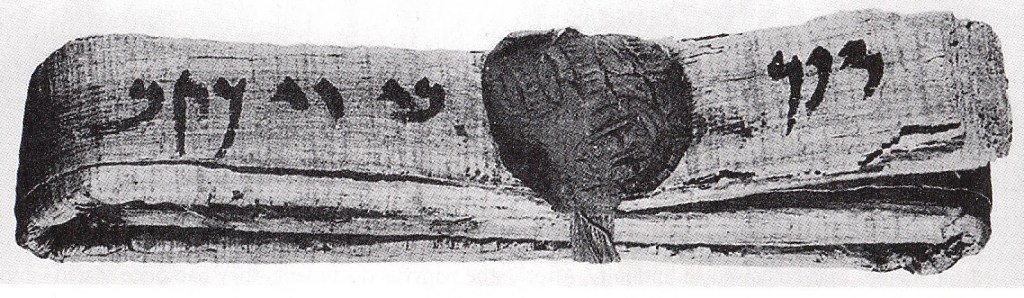
1 I commend unto you Phebe our sister, which is a servant of the church which is at Cenchrea: 2 That ye receive her in the Lord, as becometh saints, and that ye assist her in whatsoever business she hath need of you: for she hath been a succourer of many, and of myself also. – Romans 16.1–2
As the Apostle Paul approached the end of his third missionary journey, he found himself unable to travel to Rome. Yet, recognizing the importance of reaching his fellow believers there, he entrusted the delivery of his letter, later known to us as the Epistle of Romans, to someone he deeply trusted: a woman named Phebe.
Phebe, whose name means “bright and radiant,” was not Jewish, but a Greek woman. The Bible does not detail her marital status, profession, or whether she had children. What we do know, however, is this: she was a devoted Christian, a servant of the church at Cenchrea, a harbor city, and a woman who earned the full confidence of the Apostle Paul.
In a time when women were often marginalized as insignificant in public life, Paul chose Phebe to carry his letter to the Romans—one of the most theologically significant books in the New Testament. This choice was not made lightly. Perhaps Paul’s decision was strategic: a woman might have drawn less attention and thus avoided suspicion or interference during the long and dangerous journey. Whatever the reasoning, the task given to Phebe was of great importance. She wasn’t just a courier; she was also Paul’s personal representative.
Clement of Rome, writing shortly after Paul’s time, emphasized the importance of trustworthy letter carriers, describing them as “trustworthy and prudent men (or women) who from youth to old age have lived blameless lives.” Paul clearly held Phebe to that same high standard. In a world without postal services, delivering a letter meant physically transporting it across hundreds of miles—often by foot or sea—while ensuring its safety and delivering it faithfully.
Though Phebe is only mentioned in two verses of all of Scripture, her impact is profound. Paul refers to her as “our sister”—a term signifying not only their shared faith but also her inclusion in the larger family of God. Despite cultural and geographical differences, Phebe and the Roman Christians were united in Christ. They were different, but they were the same in heart. Paul instructed them to receive her “in the Lord” and to assist her in whatever she needed, a testament to her vital role in the ministry.
He also identifies her as “a servant of the church,” indicating she was actively involved in ministry work. The Greek word used here is diakonos, which is also translated as “deacon.” This suggests that she held a significant and respected position within the church at Cenchrea. Paul further praises her as “a succourer of many,” someone who provided help and support in times of need. Far from being a passive observer, Phebe was a woman who rolled up her sleeves and did the work of ministry. She served others with compassion and conviction, despite the risks that came with being a Christian in a hostile world.
Although we don’t know her background, we can infer certain things. Her ability to make the long journey from Cenchrea (near Corinth) to Rome—a distance of roughly 750 miles—suggests she was likely single, widowed, or perhaps a businesswoman like Lydia, who had both means and experience with travel. Regardless of her personal circumstances, one thing is certain: she was committed to fulfilling her role in God’s plan.
In modern terms, the journey from Cenchrea to Rome would take around 18–20 hours by car and boat. In Phebe’s time, in approximately 57 AD, the trip would have been arduous, taking weeks and involving both land and sea travel. Yet she undertook it with determination, knowing the importance of the message she carried—the Gospel itself, as expressed in Paul’s letter to the Romans.
This letter contains some of the clearest teachings on justification by faith, the role of grace, and the practical outworking of the Christian life. God could have chosen anyone to deliver it, but He chose Phebe. Through her obedience, the Roman believers—and eventually the entire world—received one of the foundational documents of the Christian faith.
Had Phebe not delivered that letter, the church in Rome might have remained in spiritual uncertainty until someone else delivered Paul’s letter, and possibly Paul’s plans to preach there could have been delayed or disrupted. Her faithfulness preserved and transmitted divine truth.
She stands among the many courageous and faithful women in Scripture who defied social expectations to serve God. Her testimony continues to challenge us today: to be faithful in whatever God calls us to do, to step forward in trust even when the journey is long or uncertain, and to serve others wholeheartedly.
Let us strive to follow Phebe’s example—bold, faithful, dependable, and willing to go the extra mile for the sake of the Gospel. In doing so, we too can become vessels for God’s message, impacting lives across time and personal bubble. Phebe’s actions remind us that seemingly small acts of obedience can have eternal consequences.
Credits:
Image credit from: BAR Magazine. “Biblical Archaeology Review.” Vol 35 No 3.
 Jael's Journal