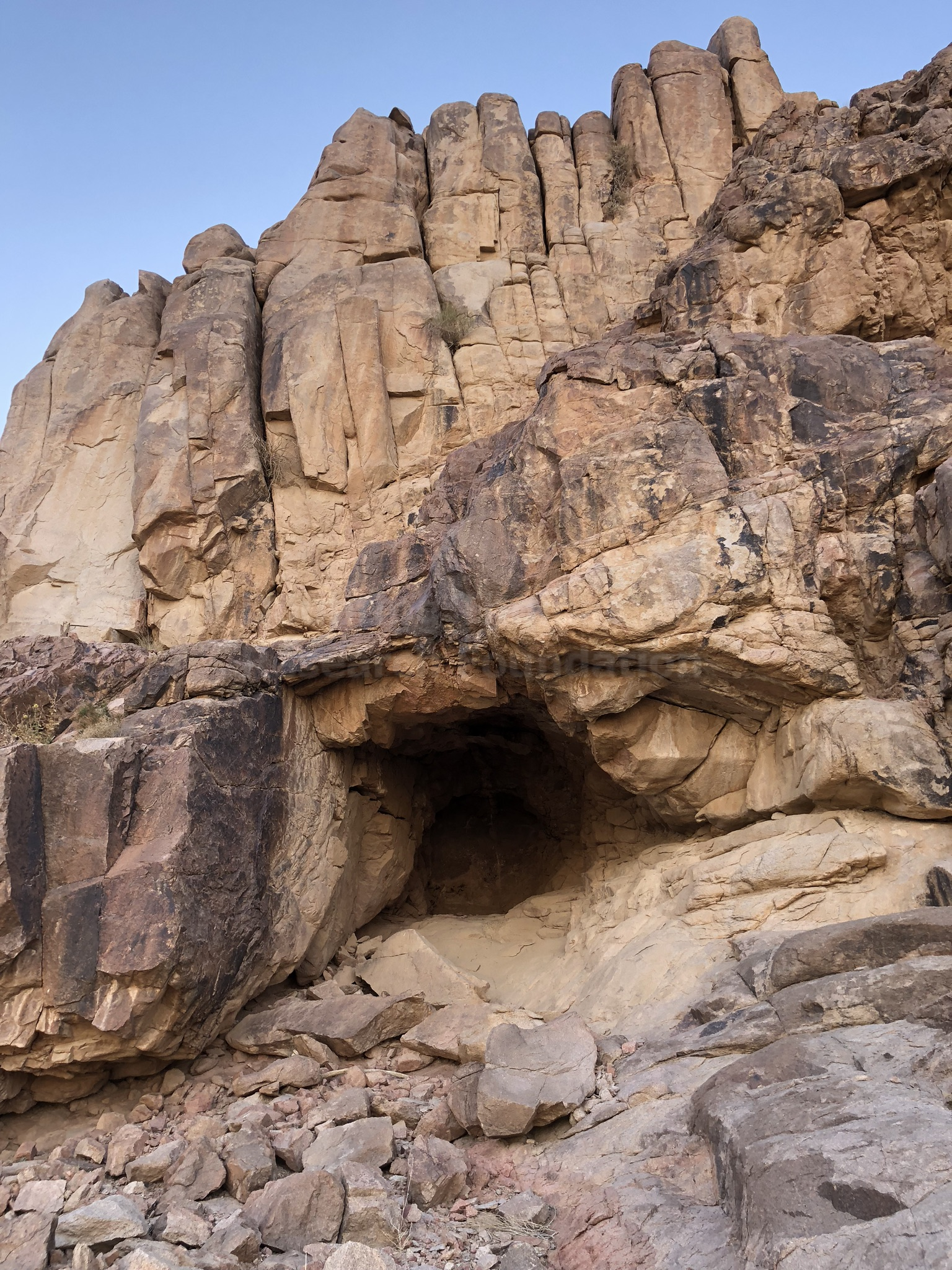
Read First Kings 19.
In First Kings 19, we find the prophet Elijah on the run for his life. He had just claimed victory over the 450 prophets of Baal and showed the people of Israel who the true God was, the one who was worthy of their worship on and off Mt. Carmel. With God, Elijah had a win over Satan, but usually when God works Satan is not very far behind trying to stir the pot. Jezebel, the wife of Israel’s King Ahab, who was herself not a follower of God, but rather a worshipper of Baal, was not pleased with the events that happened on top of Mt. Carmel and took matters into her own hands. She has had enough of Elijah and God, and orders Elijah to be put to death.
Elijah fearing for his life, flees Israel, travels a day’s journey, about 95 miles, through the wilderness arriving in Beer-sheba and rests under a juniper tree and begs for God to take his life right then and there (First Kings 19.4). There in Beer-sheba, Elijah falls asleep under that juniper tree until he is visited by the angel of the LORD and given bread to eat and water to drink. Elijah falls asleep once more before the angel of the LORD wakes Elijah up again, feeds him and then Elijah sets out on another journey. A journey covering about 260 miles and includes fasting for 40 days, until Elijah arrives at Mt. Horeb, “the mount of God.” (First Kings 19.8). Mt. Horeb, also known as Mt. Sinai, was the same place where Moses had his encounter with God in the burning bush. Mt. Horeb was also the place where Moses was told he was chosen to lead the enslaved Israelites to freedom from the Egyptians. This same mountain would be the place years later, as stated in Exodus 17 after the Israelites were given freedom from Egyptian slavery and were in their wilderness wanderings, would be where God ordered Moses to strike the rock for water to quench their thirst. This same mountain was also the place where God spoke to Moses, giving him the 10 Commandments, which set in place the covenant between the people of Israel and Himself, His children. This covenant would be the basis for their relationship, would face the test of time through war, captivity, hardship, and uncertainty, but this covenant would endure forever. This mountain has been the place where God has shown His love and care for His men and people. This mountain is now the place where Elijah has taken refuge in a cave and where soon he too, this worn out and discouraged prophet of Israel, will have his own encounter with a loving and caring God.
In verse 9 of the chapter, there on the mountain top, God directly questions Elijah, “What doest thou hear, Elijah?” We know that God knew why Elijah was there, He’s all knowing and always had His hand in the circumstances that brought Elijah to this mountain to begin with, just as He has His hand in the circumstances that bring us in our defeat and brokenness to our own mountains for refuge. In First Kings 19, we read about a broken and very defeated man of God. This Godly man, this prophet of God, who has followed God and was literally just successful in defeating and killing the 450 prophets of Baal, felt alone and depressed. He had done everything that was in his power to do right and lead the children of Israel to follow God. Instead of following Elijah’s example of following God, the children of Israel chose idol worship. Elijah had obeyed God, he had done everything that was asked of him, done right, but feels defeated. Things have not panned out how he thought they should have gone and Elijah was in such despair that he had reached the point where he asks God, he pleads with God, to take his life. God listens to Elijah and responds to his request; however what Elijah hears was not the response that he had prayed for. God was not finished with Elijah. God instructs Elijah to get up and “stand upon the mount…” (First Kings 19.11).
In Scripture we read that God passed by the mountain. First, a strong wind comes and engulfs the mountain, Elijah is now in the middle of a windstorm. Then an earthquake, soon followed by fire – it was one thing after another, after another. But in all of what was happening around him, Elijah did not hear God in the powerful displays of the wind, the earthquake or the fire even though they were impressive displays of God’s power. Instead, God spoke to Elijah in “a still small voice.” – a whisper. God had to be “physically” close to Elijah for Elijah to hear the whisper of the almighty God. Elijah also had to be open to hearing and close to God so that he could hear God’s whisper, he couldn’t be distracted by the wind, the earthquake or the fire, nor could he be distant, he had to be right where God wanted him, close to Him. In verse 13 we read that Elijah heard God’s whisper. He heard the voice of his deliverer and refuge. In his moment of fear, despair and darkness, Elijah was not alone on Mt. Horeb – the almighty God of Israel with right there with him, right beside him, whispering in his ear.
Elijah shares his feelings and frustrations to God the Father and God listens to his Child. God cares for this man, just as He cares for us when we pray and cry out to Him, voicing our pleas, feelings and frustrations. While God does not grant Elijah his request of ending his life, but rather then gives Elijah a new purpose for his life. God instructs Elijah to go back, yes go back to the place which drove him to the wilderness, the place where his life was in danger, the place where he needed to trust God the most. God gave him the job of anointing of Hazael to be the King of Syria and Jehu, to be the new King of Israel. And there was work left to be done with Elisha, who will be his successor as the next prophet of Israel. Elijah is also informed by God in verse 19, that while he may feel alone in his battle against evil, he is not alone in Israel. It is true, the majority of Israel did turn away from God to worship Baal, however there were still 7,000 who were still faithful to God. Elijah had others in Israel who were willing to fight alongside him in this battle. Elijah soon departed from Mt. Horeb and left to fulfill God’s new plan for his life – yes he had his moment of giving up and throwing in the towel, but he did not stay in his place of despair. Don’t we also have our moments of despair when we want to throw in the towel.
Sometimes we find ourselves feeling very much like Elijah. We feel overwhelmed, overlooked, broken, lost, knocked off the path we thought we were supposed to be headed down. Uncertain of what lies ahead but searching or starving for an answer or direction from God, or not, maybe we are just continuing in hopes or maybe we are running away from or toward our answer. We may even feel alone and it’s hard to understand, see or hear God atop our own mountain while we look refuge or a reason to continue in the fight, when it was God Himself who brought us to the mountain. We may have done everything God wants us to do and still things are not working out how we hoped. Perhaphs sometimes He just wants moments with us to show us who He really is, He’s powerful, but He also cares. Maybe God wants us to not give up, to go back to what brought us close to Him because there was a purpose there and there is still work to be done. We pray and ask God to move in miraculous and massive ways – ways where His power is on full display for all to see and where no one can deny that it was Him who worked things out. As we see in Elijah’s own encounter with God, God can work grand earth-shattering scales, but He does not always work like that. Maybe He disrupts or displays His power to get our attention, but sometimes God is in the quiet and unexpected moments and if we remain close to Him, right where He wants us, praying and spending time with Him in the Bible, then we might just hear what we have been looking and praying for all along. Not in rush around us, but in the quiet whisper of our loving and caring Almighty God.
 Jael's Journal